Our Research
-
Hydrologic Redistribution and Rhizosphere Biology of Resource Islands in Degraded Agroecosystems
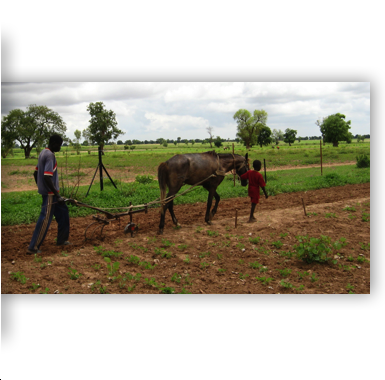
This project was funded recently by NSF-PIRE. This PIRE project will enable a partnership of U.S., Senegalese, and French researchers and students to examine how native shrubs of the Sahel region influence soil moisture and soil microbial composition and how such shrubs, when planted with food crops, might represent a new biologically- based way to improve production in semi-arid agroecosystems. The vulnerable environment of the Sahel is threat- ened by desertification and soil degradation, seriously reducing agricultural productivity and negatively impacting local communities. In the Sahel, woody shrubs co-exist with row crops and are cut back and burned every spring.
Participants
Nate Bogie, Ph.D. Student
-
-
Aggregation by root mucilages and microbial exudates
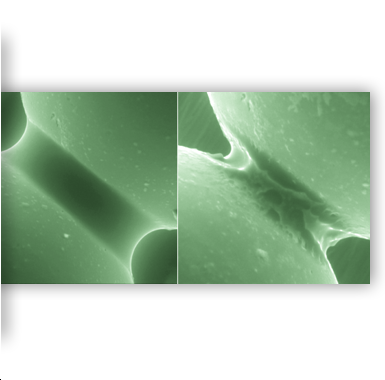
This project is funded by USDA-NIFA-AFRI (Jan 2010- Dec 2013) to study how root mucilages and microbial exudates aided by repeated wetting-drying cycles lead to the formation of soil aggregates. This research seeks to elucidate the processes involved in the formation of hierarchical soil structure that spans micron to centimeter length scales. Moreover this project is concerned with alteration of soil hydrologic characteristics within the rhizosphere or microbial environment induced by the deposition of organic matter. The project involves laboratory experiments using synthetic organic compounds and dissolved organic compounds extracted from soil as well as sand and glass beads.
Participants
Ammar Albalasmeh, PhD Candidate
-
-
-
Resiliency of high elevation meadows to a fluctuating water table
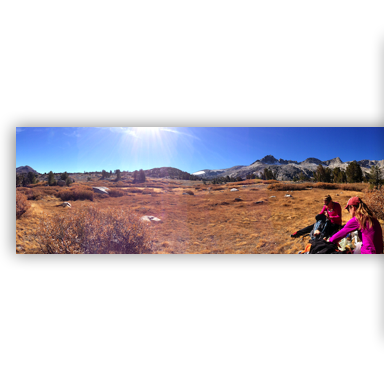
Meadow degradation, as a product of overgrazing or disruption of hydrologic regime, is a critical problem facing a variety of environments, including high elevation ecosystems of the Sierra Nevada, California. In most degraded meadows, hydrologic regime is altered by lowering of the water table due to incision of stream channels predominantly caused by overgrazing by livestock. The guiding framework of this study is that hydrologic resiliency of high elevation meadows to a fluctuating water table can be considered a function of the historic hydrologic conditions in the meadow that influence the processes of soil compaction and oxidation of SOM. These two processes can have a profound impact on the overall water holding capacity of meadows.
Participants
Chelsea Arnold, Ph.D. Candidate
-
-
Exploratory Research
The following are exploratory research that we are currently conducting in our group
* Effect of low-temperature fires on soil structure deterioration
* Pore-scale heterogeneities and their implication to macroscopic flow processes
* Emergence of phase discontinuities
 Google Scholar
 ResearchGate
 Figshare
 ORCID
ORCID
 LinkedIn
 Twitter Feed
 Photo Blog