اللهم
بمجدك الذي كلمت به عبدك ورسولك موسى بن عمران في المقدسين فوق
إحساس الكروبين، فوق عمائم النور فوق تابوت الشهادة في عمود النور
وفي طور سيناء وفي جبل حوريث في الواد المقدس في البقعة المباركة
من جانب الطور الأيمن من الشجرةك وفي أرض مصر بتسع آيات بينات،
I beseech Thee, O my God!
by Thy Glory (majd) through which Thou did converse with
Thy servant and Thy messenger Moses son of `Imrān in the
sanctified [Sinaitic] regions (al-muqaddisīn) beyond the ken of
the cherubim (al-karūbiyyin), above the clouds of Light beyond
the Ark of the Testament (al-tābūt al-shahāda) within the
Pillars of Light. And in Mount Sinai (tur sina') and Mount
Horeb (jabal al-hurib) in the sanctified Vale (al-wad al-muqaddas),
in the Blessed Spot (al-buq'at al-mubaraka) in the
direction of the Mount [Sinai] (al-ṭūr) situated at the right-hand side
of the Bush [Tree]. And likewise [he conversed] in the land of
Egypt through nine Luminous Verses (āyāt bayyināt)...
أسأل
ويوم فرقت لبني إسرائيل البحر وفي المنبجسات التي صنعت بها العجائب
في بحر سوف وعقدت ماء البحر في قلب الغمر كالحجارة وجاوزت ببني
إسرائيل البحر وتمت كلمتك الحسنى عليهم بما صبروا وأورثتهم مشارق
الأرض ومغاربها التي باركت فيها للعالمين وأغرقت فرعون وجنوده
ومراكبه في اليم،
The
Commentary of Sayyid Kāẓim al-Ḥusaynī al-Rashtī (d.1259/1843)
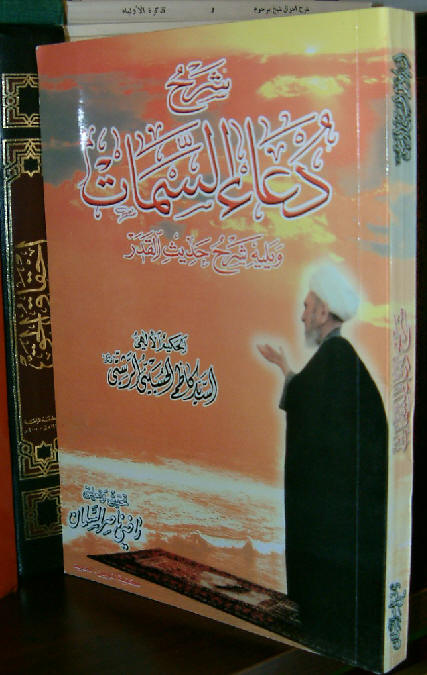
شرح
دعاى السمات وحديث القدر
(Commentary upon the Prayer
of the Signs and the Ḥadīth regarding Destiny)
Sayyid Kāẓim al-Ḥusaynī
al-Rashtī (d.1259/1843) wrote the recently (re-) printed (see
image above) medium length (1350 verse and over 300 page) commentary
on the Du`a al-simāt (Prayer of the Signs) in Ottoman Kufa (now
Iraq) on the 15th Sha`ban 1238 (27th April 1823). This for a
certain Mullā `Alī Asghar Nīshāpūrī in response to his
enquiry about a portion of this then well-known supplication, the
Du`a al-simāt and a Shi`i hadith about al-qadr (destiny,
fate...). The Shaykhi
leader Āqā Ḥajjī `Abu'l-Qāsim Khān al-Ibrahīmī -Kirmānī
(d.1969), the
well-known as the author of the Fīhrist kutub mashāyikh `izam
(Catalogue of the books of the mighty Shaykhs) a Shaykhī `Bibliographical Index', had it that the Arabic
Commentary on the Du`a al-simāt of Sayyid Kāẓim was replete with "weighty mysteries and philosophical
wisdom" (Fihrist, No. 144 p. 292). Kirmānī also mentions that the original mss.
of this work is lost and refers to the existence of an old
(lithograph?) printing (chap qadīm) (ibid.).
A very recent printing of this work is within the paperback
volume of the `Divine wise one', Sayyid Kāẓim al-Ḥusaynī al-Rashtī
شرح دعاء السمات ويليه شرح حديث القدر
(Sharh du`a' al-simāt wa
yalayihi Sharḥ ḥadīth al-qadr). Beirut: Mu`assat Fikr al-Awḥad,
[14th Rabi` al-Awwal] 1423/ [26th May] (Syria [Damascus] al-Sayyida
Zaynab). 2002. This printing appears to have been expertly made
from various original mss. (see pp.24-29, first and last pages
are reproduced here) as edited and introduced by Raḍī Nāṣir al-Salmān.
It is printed along with an edition of Sayyid Kāẓim's brief
`Commentary upon the Ḥadīth of al-Qadr' (Power, Destiny) which
occupies (with its introduction) pp. 287-298.
In this printing the general or editors introduction occupies
pp.1-36 ADD HERE. The text of the Sharḥ du`a al-simāt
commentary occupies pp. [37] 41-385. The text of the
'Prayer of the Signs' is divided into 72 portions and commented
upon in some detail. ADD
As transmitted and
commented upon by SKR in the the abovementioned edition of
the Du`a' al-simāt, the prayer opens with the basmala
بسم الله الرحمن الرحيم and continues with
reference to the Greatest Name of God as follows: اللهم إني
أسألك باسمك العظيم الأعظم الأعز الأجل الأكرم الذي إذا دعيت به
على مغالق أبواب السماء للفتح بالرحمة O my God! I,
verily, beseech Thee by Thy Mighty, Mightiest, Most Powerful,
Most Glorious, Most Gracious Name which, when I supplicate
[Thee] therewith, that the strongly-bolted portals of the
Gates of Heaven might, through [Thy] Mercy, be
opened up....
A few paragraphs
later the The Du`a simāt echoes a biblical verse in the book Deuteronomy,
chapter 33 verse 2 providing an important example of Shi`i Islamo-biblical
assimilation.
ADD
Echoes of the
Du`a al-simāt
(Prayer of the Signs) in the writings of the Bab and Baha'-Allah
Occasional traces of
the influence of the Du`a al-simāt can be found in the writings
or scriptural Tablets of both the Bāb and Bahā'u'llāh as well as their later Bahā'ī successors.