|
The Writings of Sayyid Kāẓim Rashtī
(d.1259/1843).
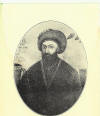
SAYYID KĀẒIM RASHTĪ
Stephen Lambden UC-Merced.
Very little bibliographical, translation and
other work has been done on the hardly studied writings of Sayyid Kāẓim Rashtī, the Persian born successor to Shaykh Aḥmad al-Aḥsā'ī (d.1241/1826). Though there are several bibliographical lists of his writings
(e.g. Kirmānī, Fihrist, Pt. II) there seems to be no reliable or
fully comprehensive list of either those published or in mss. Quite a number of "old", 19th cent. printings of key texts of Sayyid Kāẓim were made, though these works are now very
difficult to obtain. Select twentieth century printings or reprints
periodically put out from Kirmān (Iran, from the Sa`adat
press) and other publishers,
also remain, for the most part, difficult to consult in hard copy. Several important Shaykhī microfilm collections are available internationally from which copies can be
obtained (e.g. Chicago, Regenstein Library), see the lower 3 pages of this
URL:
http://www.lib.uchicago.edu/e/su/mideast/Persian00.pdf
As will be evident, however, items from the
first two Shaykhs of the Shaykhī school are not that well-represented;
2 microfilm reels of Sayyid Kāẓim!
As will be evident below, however, modern editions of
Sayyid Kāẓim's Arabic works have begun (in the last decade) to be published in Beirut (Lebanon),
Damascus (Syria) and Kuwait... (See below). Please communicate additions or
corrections :
lambden@ohio.edu
Some Bibliographical sources
for the Arabic and
Persian writings of Sayyid KāẒim Rashtī.
-
(1) Fīhrist-i Sayyid
compiled by Sayyid Kāẓim Rashtī
himself. A bibliographical list
his own works and those
of
Shaykh Aḥmad.
Listed in School
of Oriental and African Studies, Mss No. 92308, Item no. 38, pp. 398a-406b. See also
Adam Gacek, Catalogue of the Arabic Manuscripts in the Library of the
School of Oriental and African Studies, London, 1981, No. 277, pp. 165-9.
This list
of Sayyid Kāẓim
was composed in Rajab 1258/1842 and the manuscript is written by Jawād ibn Qāsim al-Najjar in Kufa and completed on 30 Dhu'l-Ḥijjih
1259 / January 1844, 19 days after the death of Sayyid Kāẓim"
(Momen, BSBM1).
-
(2)
Fihrist-i
kutub-i
mashāyikh `izam by Shaykh
Abu'l-Qāsim Kirmānī.
3rd Kirmān:
Chāpkhāna Sa`ādat, n.d
(several reprints).
Ongoing translation URL below
-
(3) In
1345/1926
Sayyid `Abdu'l-Majid
Fa'iqī wrote a
large (1500pp.)
bibliographical
list of the writings
of all of
the Shaykhī leaders
-
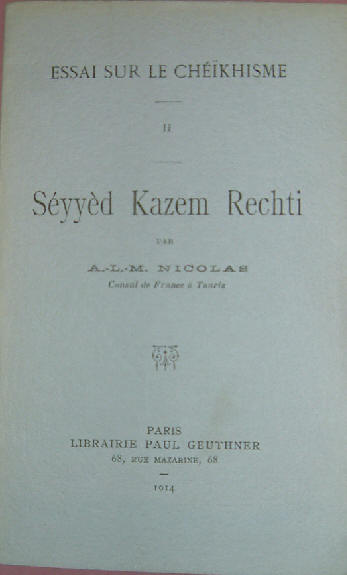
(4) Nicholas' bibliography in his
SÉYYED KAZEM RECHTI, Ch. II: 32-36
(See below)
A. L. M. Nicholas
http://library.bahai.org/sc/nic2.html
(1864-1937)
Perhaps the earliest
western bibliographical listing of Sayyid Kāẓim's Arabic and Persian
writings was that of the French scholar of Babism and Shaykhism, A. L. M. Nicholas (d.1937).
This in vol.2 of his also 4 volume Essai sur le Shaykhism...
Nicolas evidently
utilized the
Fīhrist-i Sayyid
(see above) for his list of the works of Shaykh
Aḥmad (in the Essai sur le Cheikhisme, I. Cheikh Ahmed Lahçahi,
(Paris, 1910), 63-72
and this also appears to have been the case with his listing of Sayyid Kazim's
works in his
Essai sur le Cheikhisme,
II
SÉYYED KAZEM RECHTI.
(see SOAS mss. ADD).
In his SÉYYED KAZEM RECHTI,
Ch. II: 32-36 Nicholas includes a French (Persianized) transliterated list
of 135 major writings of Sayyid Kāẓim Rashtī. The list will be
repeated here, with a modern English transliteration....
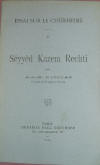
SÉYYED KAZEM RECHTI, Ch.
II: 32-36
AN ANNOTATED TRANSLATION OF
THE SAYYID KĀẒIM BIBLIOGRAPHY IN
PART II OF
THE FIHRIST (3rd Ed.
Kirman : Chapkhana Sa`adat, n.d
[1977] of
Shaykh
Abu'l-Qāsim ibn Zayn
al-Ābidīn
Khān al-Kirmānī
(d.1389/1969),
[URL below]
The writings of Sayyid Kāẓim
Rashtī, Fihrist Pt. II.
Annotated
trans.
Stephen N. Lambden.
Hurqalya Publications, 2009
IN PROGRESS 2009
select mss. and published writings
of Sayyid KāẒim Rashtī

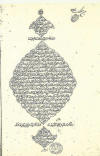
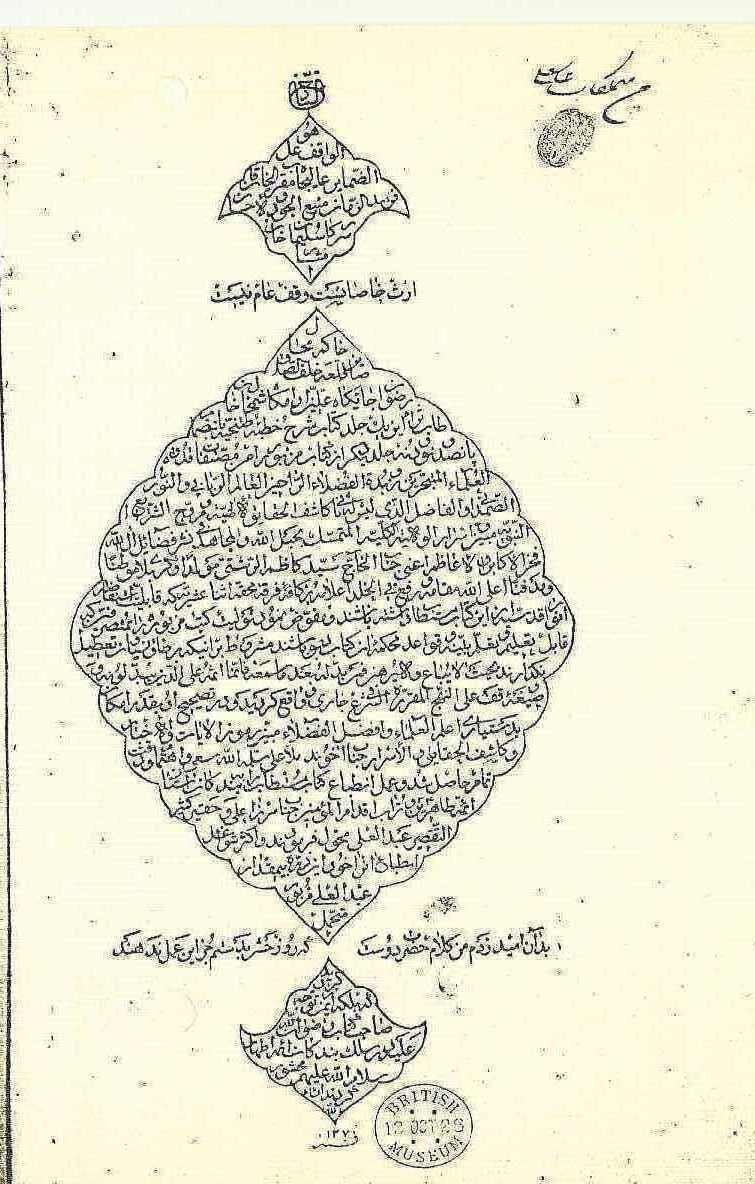
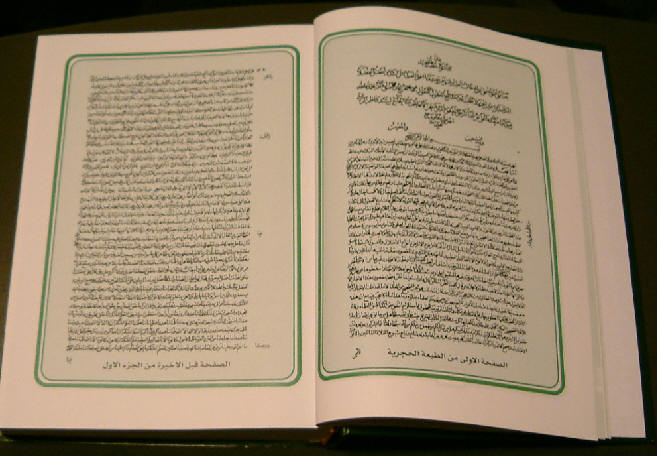
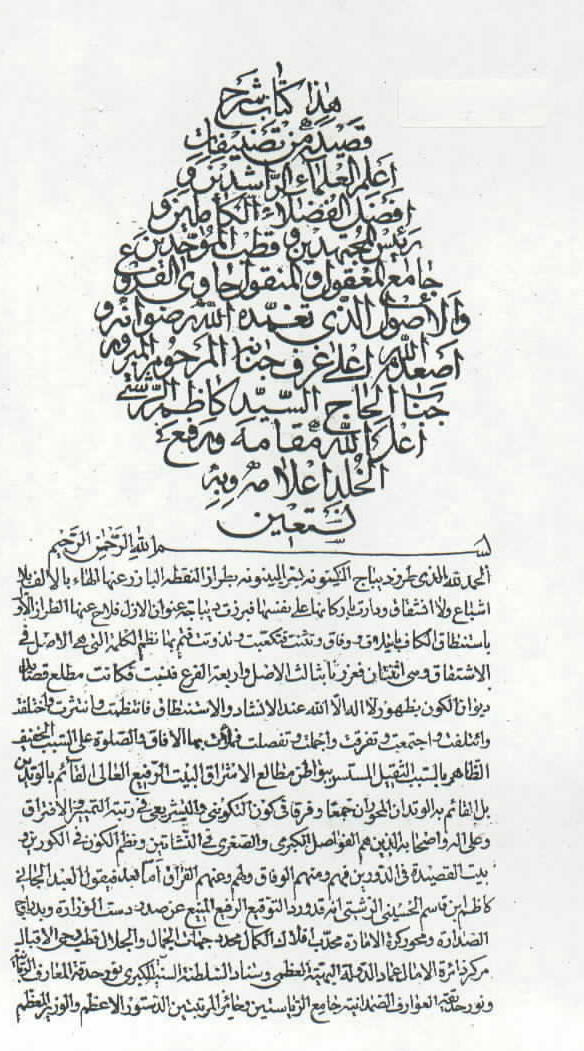
[Scan of the opening page of the 1270/ 1853-4 lithograph edition]
Copy in British Library (Museum] London.
كتاب
شرح
خطبة طتنجية
Kitāb sharḥ khuṭba ṭutunjiyya
("The Book of the Commentary upon the Sermon of the Gulf")
1st lithograph ed., Tabriz,
1270 /1853-4.
This 24,700 verse work (so Kirmānī, Fihrist No. 143 p.292 ) is a partial commentary upon about half of the khuṭba
al-ṭutunjiyya
(loosely) "Sermon of the Gulf" ascribed to Imam `Alī (c. 40/661) which
can be found, for example, in the Mashāriq anwār al-yaqīn.. (Dawning-Place
of the Lights of Certitude..) of Rajab al-Bursī (d. c.
814/1411) a collection of often esoteric or gnostic documents expressing a
high imamology from the first Imam which some Shī`ī authorities have
considered ghuluww ("doctrinally extremist"). This
oration of the first Shī`ī Imam was allegedly delivered between Kufa
and Medina and extends to about four pages of Arabic text (see this website
for an attempted ongoing translation
http://www.hurqalya.pwp.blueyonder.co.uk/03-Biblical-islam-BBst/TTNJ.HTM ). Kirmānī reports that the original mss.
is lost but refers to the very rare old lithograph edition.
The etymologically opaque, Arabic quadriliteral loan-word (from Greek?)
تطنج /
طتنج
=
T-Ṭ-N-J (= taṭanj or tuṭunj?) / Ṭ-T-N-J (= ṭatanj, ṭuṭunj..?)
has been variously spelled and pointed, an issue which remains to be resolved. The title page of the (Tabriz) printed 1270/1853 edition of Sayyid Kāẓim's
commentary on the "Sermon of the Gulf", is Sharḥ khuṭba
al-ṭutunjiyya
(emphatic
ط
=
ṭ , the first of the two Arabic letter "t"s).
Within this work the spelling and
pointing
طُتُنْج
=
ṭutunj is adopted and favored.
On, for example, page 203 this spelling and pointing is found. It is also
found on p. 174 where Sayyid Kāẓim glosses
ṭutunjayn
(loosely "two gulfs) with khalījayn (= "twin bays") in the course
of commenting on `Alī's words; doubtless in the light of the text of the Kh-ṭutunjiyya
which itself mentions khalījayn (= "twin bays"):
انا
الواقف على ا لطتنجين
"I am the one who is
stationed over the two Gulfs"
(wāqif `alā al-ṭutunjayn)
Sayyid Kāẓim comments upon these words in the
Sharḥ al-khuṭba al-ṭutunjiyya saying,
الطتنج
هوالخليج المتشعب من البحر
و الطتنجين الخليجين منشعبان من البحرالواحد
كما ياتى تفسره من كلام
"The
الطتنج
( ṭ-t-n-j = ṭutunj) is the bay [gulf, canal... al-khalīj)
branching out (mutasha``ib) from the [cosmic] Ocean (al-baḥr). And
the twin gulfs are the twin bays, doubly branching out from a single Ocean; just
as the exposition of something is expressed through speech... (Sh-Tutunjiyya,
174)"
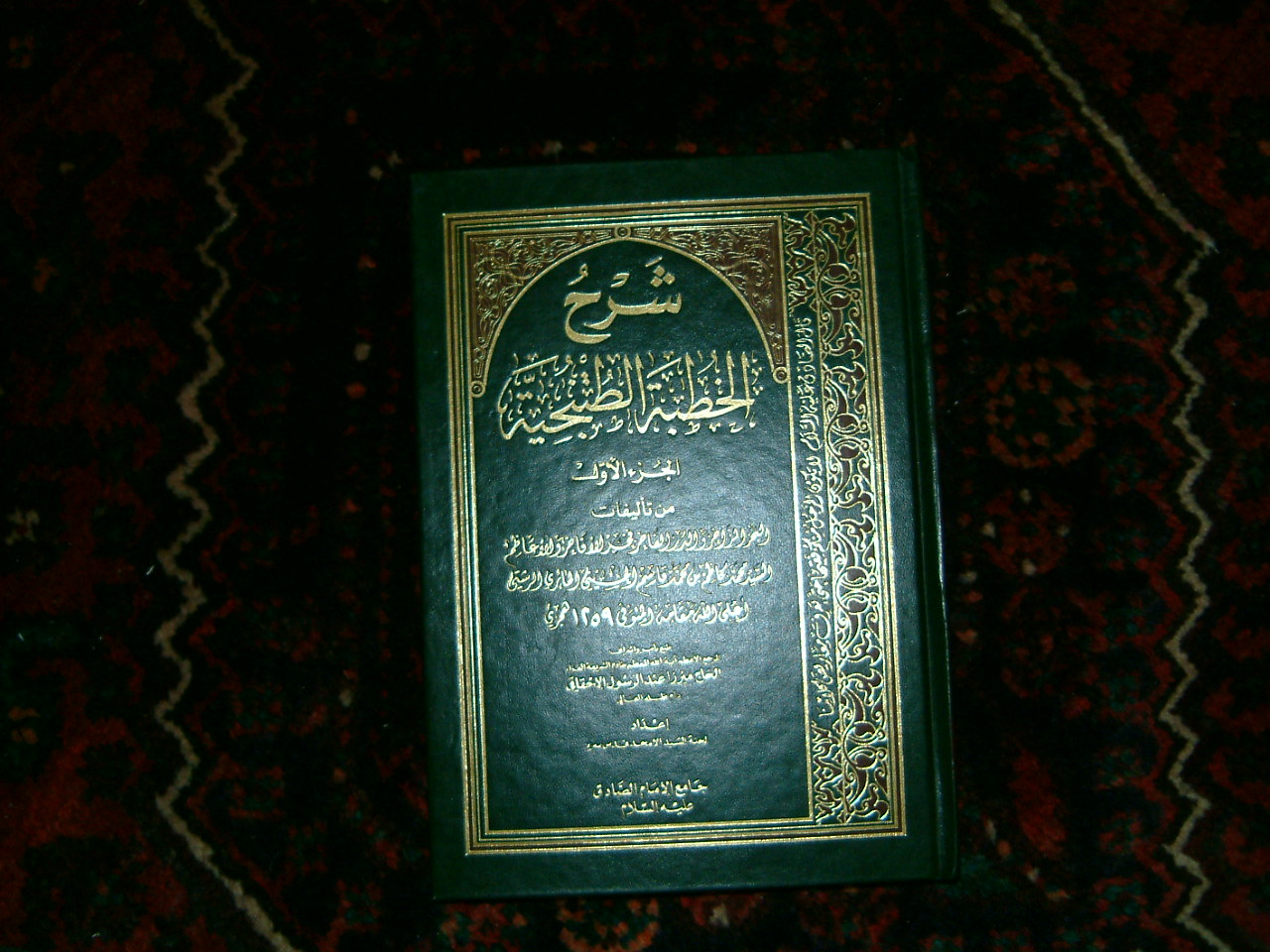
An excellent new edition of Sayyid Kāẓim Rashti's
Sharḥ al-khuṭba al-ṭutunjiyya
in 3 vols.
Kuwait:
Jami`a al-Imam al-Muhammadādiq [ed. Hajji Mīrzā `Abd al-Rasūl al-Ihqāqī]
1421/2001 has
recently appeared:
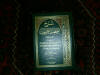 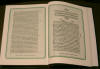
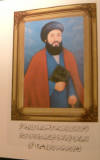
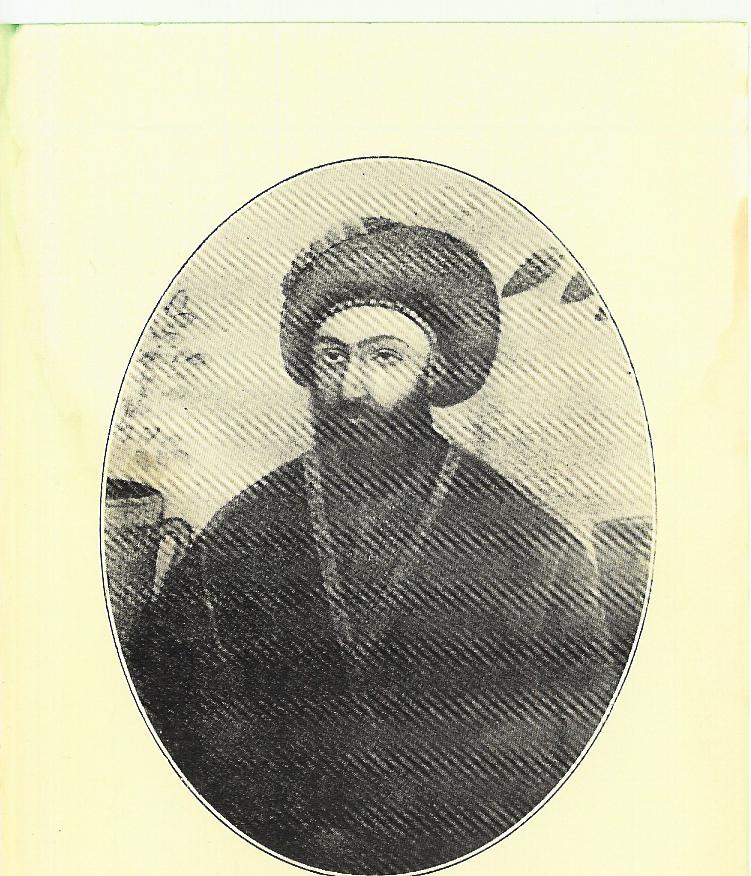
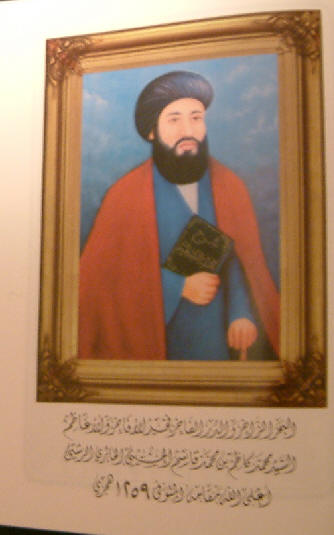
Likeness of Sayyid Kāẓim Rashtī
holding the
Sharḥ al-khuṭba al-ṭutunjiyya.
(as found in the new printing)
Sharḥ al-qaṣīda al-lāmiyya
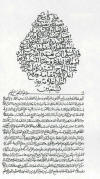
شرح قص يده
لاميه عبدالباقى افندى
Sharḥ al-qaṣīda al-lāmiyya
(Commentary upon the Ode rhyming in [the letter]
ل
"L"
of `Abd al-Bāqī Āfindī Mawṣūlī )
Kirmānī in his Fihrist (= No.
149 p. 293) states that the original, 16,000 verse mss. is lost but
refers to the old lithograph printing which is presumably the very rare [Tabriz] n. p., 1270/1853
(see below). Sayyid Kāẓim's
lengthy and deeply theological Sharḥ al-qaṣīda al-lāmiyya
is an Arabic commentary upon an Arabic ode rhyming in the letter
ل ("L") composed by `Abd al-Bāqī
Effendī Mawṣūlī (of Mosul, d. ADD). The
qaṣīda al-lāmiyya upon which Sayyid Kazim was
written in celebration of .. ADD
In the Name of God, the Merciful, the
Compassionate
Praise be to God who ornamented the brocade
of existence with the mystery of differentiation (sirr al-baynūnat) by
virtue of the ornament (ṭirāz) of the emergent Point (al-nuqṭat al-bāriz,
at the base of the letter "B" =
ب ) from which
comes the letter "H" (al-hā' =
ه
) through the letter "A"
ا (bi'l-alif) without
filling up (ishbā') or segregation (inshiqāq)....
Above is a translation from the scan of the opening page of a lithograph edition
of the Sharḥ al-qaṣīda al-lāmiyya.
Its opening lines following the basmala (click on
the image to make it clearly visible), it might be noted here these lines have been interpreted by Bahā'-Allāh
(1817-1892)
in a Tablet to Mullā `Alī Bajistānī (cited Ma'idih 7:139) and
by his son `Abd al-Bahā' in his Tafsir on the basmala as a
cryptic, acrostic spelling out the Arabic word bahā' (=
B
ب
+ H
ه
+ A
I [+
ء
=
hamza ], conjoined spelling =
بهاء
bahā')
which they
viewed as the quintessence of the al-ism al-a`zam, the Mightiest
or Greatest Name of God.
The 5th (Kirmani) Shaykhī leader Hajjī Zayn al-Ābidīn Khān Kirmānī
(1276-1360/1859-1942), has also commented on the opening of the Sharḥ al-qaṣīda al-lāmiyya
of Sayyid Kāẓim Rashtī in his Arabic Sharḥ al-khuṭba min sharḥ al-qaṣīda
which is dated 19th Rajab 1336 / 30 April 1918. This 227 page work was
first printed, Kirman: Maṭba`ah al-Sa`ada. n.d. [197?/8?].
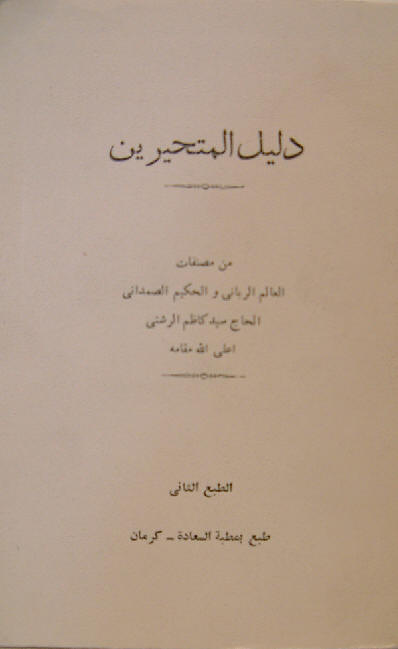
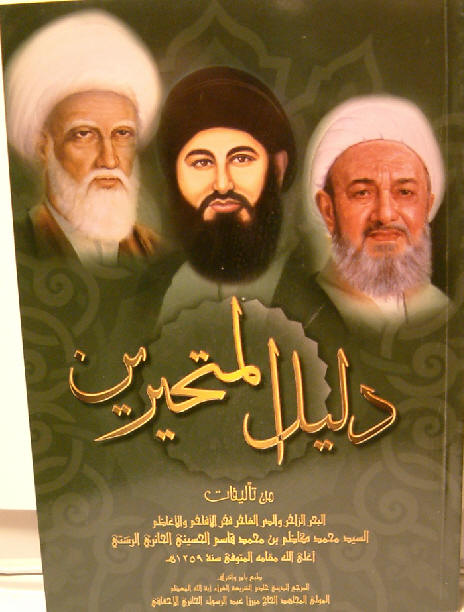
Dalīl al-mutaḥayyirīn
("The Proof regarding Matters Perplexing")
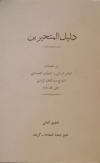
Sayyid Kāẓim Rashti,
Dalīl al-mutaḥayyirīn ("The Proof
regarding Matters Perplexing") 1st ed. [Tabriz?], 1276/1859-60.
A work of Sayyid Kāẓim in response issues surrounding the
differences between the person and doctrinal positions of Shaykh Aḥmad al-Ahsā'ī
and other Shī`ī Muslims.
Completed near Kufa (Iraq) 11th Rabī al-Thānī [II] 1258/ May
22nd 1842.
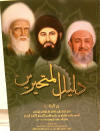
Dalīl al-mutaḥayyirīn
The most recent Arabic 2nd ed. 3rd printing of
1423/2002 (see above) is the very beautifully printed edition
with pictures of Shaykh Ahmad, Sayyid Kāẓim and the Kuwaiti born
al-Ḥajjī Mīrzā`Abd
al-Rasūl al-Ḥā'iri al-Iḥqāqī [Born 22nd Mehr 1307 Sh.
/ ADD ] on the front cover (as well as on many inside pages).
.185 pp. + Index (pp.186-7) ...
Persian Translations of the Arabic Dalīl al-mutaḥayyirīn
1st Arabic edition,
Translated into Persian by his disciple Muhammad Raḍī
ibn Muhammad Riḍā',
1st ed. Jumadī al-Awwal 1261/ May 1845. (Dhari`a 8:360).
2nd (Arabic) ed.
Maṭba`at al-Sa`adat, Kirmān, n. d.
[197?] 178pp.
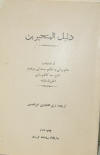
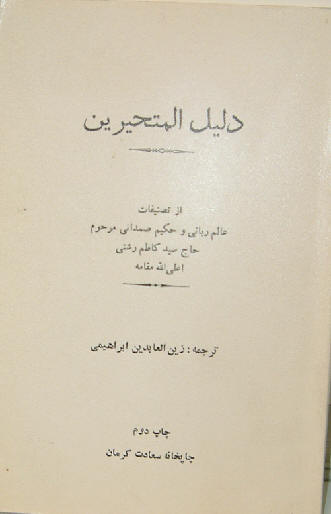
There is also (see above) a Persian trans.
by Zayn al-Ābidīn Ibrāhīmi .
2nd printing Kirmān:
Chāp-Khānih Sa`adat. pp. 4 (Index)+ 181pp.
Sharḥ du`a al-simāt
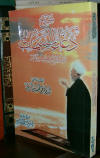
شرح
دعاى السمات
وحديث القدر
(Commentary upon the Prayer of the Signs and the Ḥadīth
regarding Destiny)
Kirmānī
mentions that this medium length work of 1350 verses was written in reply to Mullā `Alī Asghar Nīshāpūrī on 15th Sha`ban 1238 (27th April 1823) in Kufa
about a portion of the well-known Du`a-yi simāt, the supplication or
`Prayer of the Signs'. In his opinion it is a work replete with "weighty
mysteries and philosophical wisdom" (Fihrist, No. 144 p. 292).
Kirmānī
again mentions that the original mss. of this work is lost and refers to
the existence of an old (lithograph?) printing (chap qadīm) (ibid.).
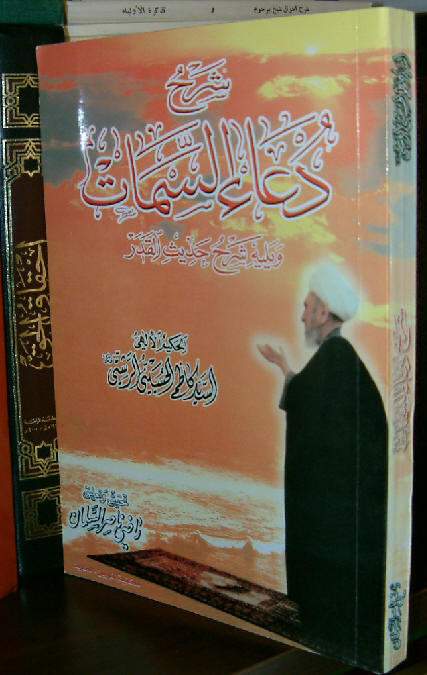
A very recent
printing of this work is within the paperback volume of the `Divine wise one',
Sayyid Kāẓim al-Ḥusaynī al-Rashtī
شرح
دعاء السمات
ويليه شرح حديث القدر
(Sharh du`a'
al-simāt wa yalayihi Sharḥ
ḥadīth al-qadr). Beirut: Mu`assat Fikr al-Awḥad, [14th Rabi` al-Awwal] 1423/
[26th May] (Syria [Damascus] al-Sayyida Zaynab). 2002. This printing appears to
have been expertly made from
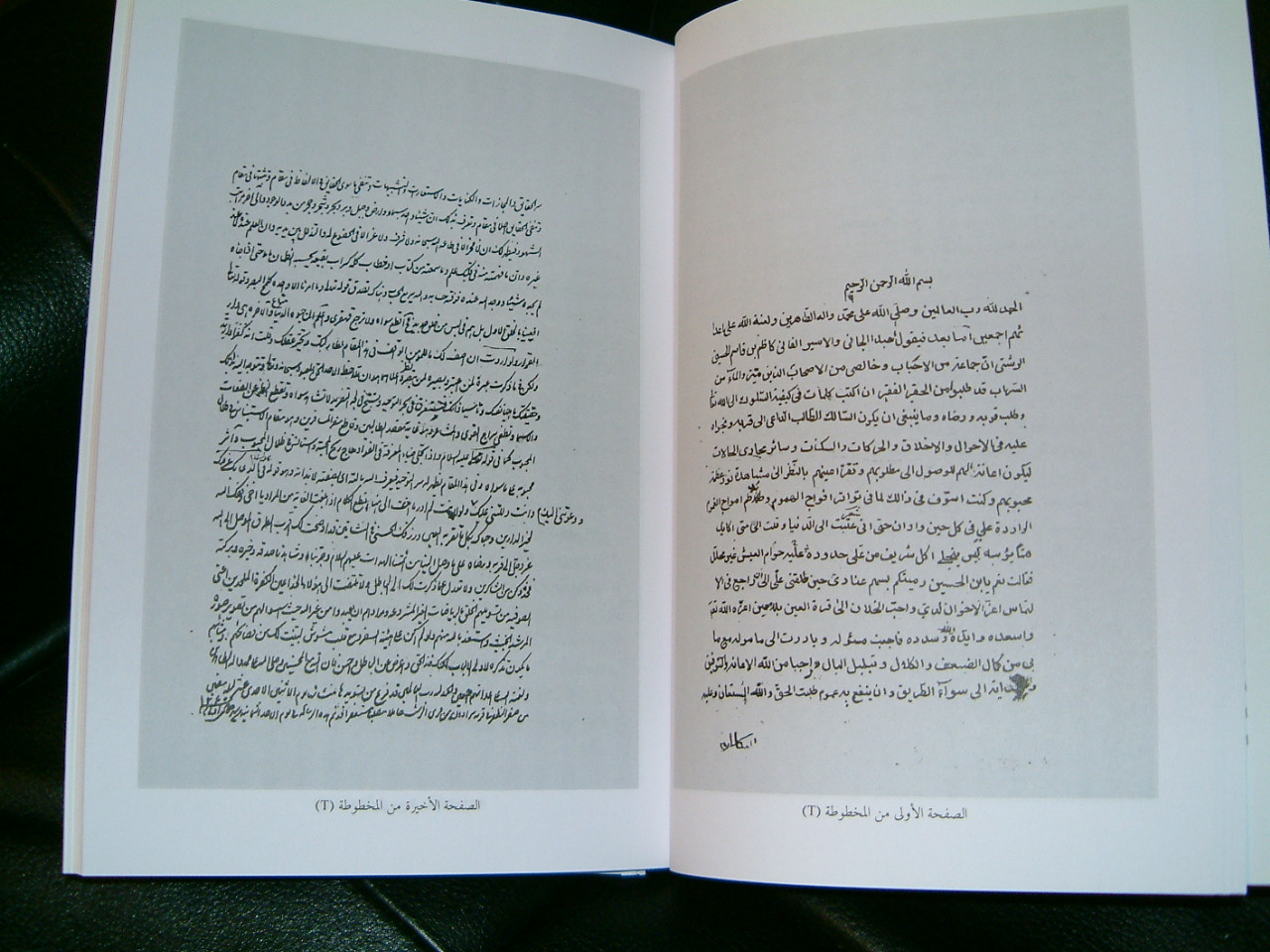
various original mss. (see pp.24-29, first and last pages
are reproduced here) as edited and introduced by Raḍī Nāṣir al-Salmān. It is
printed along with an edition of Sayyid Kāẓim's brief `Commentary upon the Ḥadīth of
al-Qadr' (Power, Destiny) which occupies (with its introduction) pp.
287-298.
In this printing the
general or editors introduction occupies pp.1-36 ADD HERE.
The text of the Sharḥ du`a al-simāt commentary occupies
pp. [37] 41-385. The text of the 'Prayer of the Signs' is divided into 72
portions and commented upon in some detail. ADD
The Arabic text of the Du`a'
al-simāt exists in various versions
or recensions which are believed to go back to the fifth and sixth Imams,
Muhammad al-Baqir ( d. c.126/743) and Ja`far al-Sadiq (d. c 48/765). It has
been variously transmitted and reproduced in such works as the al-Misbāḥ al-mutahajjid
al-kabir (The Greater Luminary of the Pilgrim..) of Nasir al-Din al-Tusi
(d.460/1067) and the Jamāl al-usbū` (Beauty of the Week) of Raḍī
al-Dīn Ibn Ṭāwūs (d. 664/1226). As transmitted
and commented upon by SKR in
the the abovementioned edition of the
Du`a'
al-simāt, the prayer opens with the
basmala
بسم الله
الرحمن الرحيم
and continues with reference to the Greatest Name of God as
follows:
اللهم إني أسألك باسمك العظيم الأعظم
الأعز الأجل الأكرم الذي
إذا
دعيت به على مغالق أبواب السماء للفتح بالرحمة
O my God!
I, verily, beseech Thee
by Thy Mighty, Mightiest, Most Powerful, Most Glorious, Most Gracious Name
which, when I supplicate [Thee] therewith, that the strongly-bolted portals of
the Gates of Heaven might, through [Thy] Mercy, be opened up....
The Du`a simāt a
few paragraphs into this supplication
interestingly echoes a biblical
verse in the book Deuteronomy, chapter 33 verse 2
and is an important example of Shi`i Islamo-biblical gnosis:
ADD
Echoing various verses of the
bible one version of the Du`a simāt
commences
as follows: CHECK TEXT AND REMOVE ERRORS..
وأسألك اللهم بمجدك
الذي كلمت به عبدك ورسولك موسى بن عمران في المقدسين فوق إحساس الكروبين، فوق
عمائم النور فوق تابوت الشهادة في عمود النور وفي طور سيناء وفي جبل حوريث في
الواد المقدس في البقعة المباركة من جانب الطور الأيمن من الشجرة وفي أرض مصر
بتسع آيات بينات، ويوم فرقت لبني إسرائيل البحر وفي المنبجسات التي صنعت بها
العجائب في بحر سوف وعقدت ماء البحر في قلب الغمر كالحجارة وجاوزت ببني إسرائيل
البحر وتمت كلمتك الحسنى عليهم بما صبروا وأورثتهم مشارق الأرض ومغاربها التي
باركت فيها للعالمين وأغرقت فرعون وجنوده ومراكبه في اليم،
I beseech Thee, O my God! by Thy Glory (majd) through which Thou did converse with Thy servant and Thy
messenger
Moses son of `Imrān in the sanctified [Sinaitic] regions (al-muqaddisīn) beyond the ken of the cherubim (al-karūbiyyin), above the clouds of Light beyond
the Ark of the Testament (al-tābūt al-shahāda) within the Pillars of Light, And in Mount Sinai (tur sina') and Mount Horeb (jabal al-hurib)
in the sanctified Vale (al-wad al-muqaddas),
in the Blessed Spot (al-buq'at al-mubaraka) in the
direction of the Mount (al-tur)
situated at the right-hand side of the Bush [Tree]. And likewise [ he conversed] in the land of Egypt
through nine Luminous Verses (āyāt bayyināt).
And He separated the [Red] Sea for the children of Israel.. .... ADD.
شرح حديث القدر
`Commentary upon the Ḥadīth of
al-Qadr' (Fate, Power, Destiny).
This tradition reads as follows:
تفسيراية الكرسى
Tafsīr āyat al-kursī
("Commentary on the Chair [Throne] Verse" = Q. 2:255).
Apparently written in 7,000 verses when SK was 20 years
old. There appears to be an old printing. A mss. copy can be found in
ADD
Following a prescript, this work opens as follows:
شرح آية الكرسي
من مصنفات السيد الاجل الاوحد المرحوم
السيد كاظم بن السيد قاسم الحسيني الرشتي اعلي الله مقامه
بسم الله الرحمن الرحيم
The Commentary upon the "Throne
Verse" (Āyat al-kursī = (Q. 2:255)
from the compositions of the most glorious and unique, the late Sayyid Kāzim
ibn Sayyid Qāsim al-Ḥusaynī al-Rashtī,
(may God make his station sublimely transcendent).
_____________________________
In the Name of God, the Merciful, the Compassionate.
الحمد لله الذي اجلي افئدة العارفين لتجليات ظهوره و انار قلوب
السالكين لاشراقات نوره و شرح صدور العالمين لتشعشع لمعات بدوره و
الصلوة علي سيدنا محمد الذي به استقر عرشه و كرسيه و هو الاسم الذي
استقر في ظله فلايخرج منه الي غيره و هو الاسم الاعظم المكنون و النور
الانور المخزون به نورت الانوار و به ظهرت الاسرار و به اشرق النور من
صبح الازل و به وجدت الموجودات ما قل و جل و علي آله و اصحابه شموس
الهدي و بدور الدجي و اعلام التقي و ذوي النهي و اولي الحجي و كهف
الوري و ورثة الانبياء عليهم صلوات الله ما دامت الارض و السماء .
Praised be unto
God Who shed the splendor of His radiance upon the inmost hearts of the mystic knowers so as to actualize the disclosure of the orient lights of His theophany. He set ablaze
the hearts of the mystic wayfarers through the orient splendors of His Light
and explicated the inner retreats [bosoms] of all the worlds for the purpose
of dazzlingly illuminating the radiances of His cyclic schemata. And
blessings be upon our Master [Sayyid] Muhammad through whom He settled down
upon His Throne (`arsh) and His Seat (kursi) for he is the Name through
the shadow of which eyes were solaced. Wherefore there did not emerge
from before me aught save what is of Him for he [Muhammad] is the Hidden,
Mightiest Name (al-ism al-a`zam) and the Light of Lights treasured up, the
very one
through whom the Lights found illumination. Through him were
mysteries disclosed and Light irradiated from the Dawn of Eternity (subḥ al-azal).
And through it him did all existence find realization....
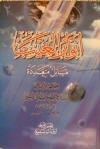
[No.2 ]
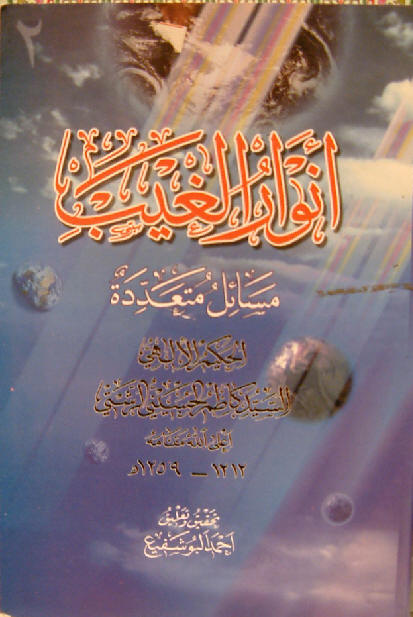
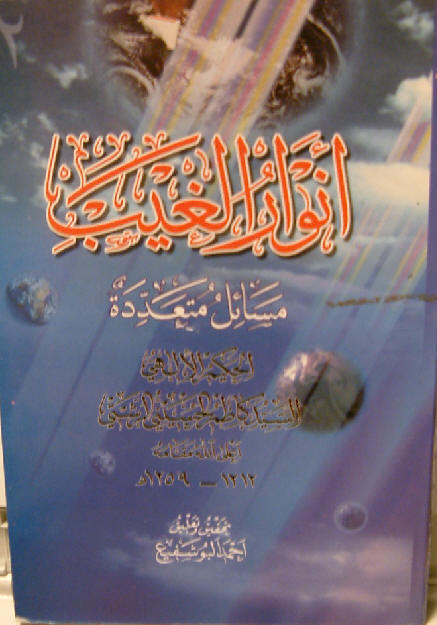
Anwār al-ghayb, masā'il mu`tu`addida li-ḥakīm al-awwal,
hiya
Sayyid Kāẓim al-Husayni, al-Rashtī...
("Lights of the Unseen,
Multifarious Issues by the foremost philosopher who is Sayyid Kāẓim Rashtī (may
God elevate his station) (1212-1259 AH).
Lajna Iḥyā' turath madrassa
al-Shaykh al-Ahad [n.p.] 1st printing [1,000 copies] 1421/
A small 131 page Arabic booklet
(+2 page index) edited by Aḥmad `Abd al-Wahhāb al-Bushafī`
Recent publications of works of Sayyid Kāẓim
Rashtī
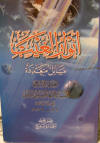
انوارالغيب مسائل متعددة
[No. 2 on cover]
Anwār al-ghayb, masā'il muta`addid ("Lights of the Unseen, Multifarious
issues").
A compilation of miscellaneous replies to
religious and philosophical issues by SKR edited and annotated by Aḥmad `Abd
al-Wahhāb al-Būshafī` and put out from Damascus (Syria) through the Sayyida
Zaynab / Lajnat Iḥyā Turāth Madrassa al-Shaykh al-Awḥad [al-Aḥsā'ī].
1st ed. 1421/ 2000.
The introductory, editorial part
occupies pp.1-20 and the next 4 pages reproduce the mss. on which
sections of this printing is based. Section one is on al-Malā'ikat (The Angels
[Angelology]) in 4 main divisions spanning pp. 31-77. Section two is entitled
Tajdīd al-Khilqa (The Renewal of the Created Order, pp. 79-94)
and is primarily SKR's response to a question about the state of things after
the qiyāmat al-kubrā (the Greatest [Eschatological] Resurrection)
relative to the khalq jadīd ("new Creation") mentioned in a tradition
from of Imam Ja`far al-Şādiq as cited by Ibn Babuwayh (d. 381/991) in
his Kitāb al-khiṣāl.
Section three is a response to a question about about whether al-fi`l
(the Active Reality) is something nobler than al-maqāmāt (the ranks or
levels [of human activity]) and the ism al-fā`il ([active participle] the
[Shaykh as the] name of the One Efficacious, pp. 95-111). Complex metaphysical
issues are discussed in this section. The fourth section is the response of
SKR to a question about metaphysical and philosophical issues surrounding the
nature of al-ḥarakat al-jawhariyya ("substantial motion", a central concept in
the philosophy of Mulla Şadrā) ( pp.117-127). The book ends with a note signed
by Aḥmad al-Bushafī` al-Aḥsā'ī (dated 3rd Sha`bān 1419/ 23rd Nov. 1998), a
list of sources drawn upon in the book and and Index (pp. 130-137).
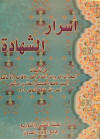
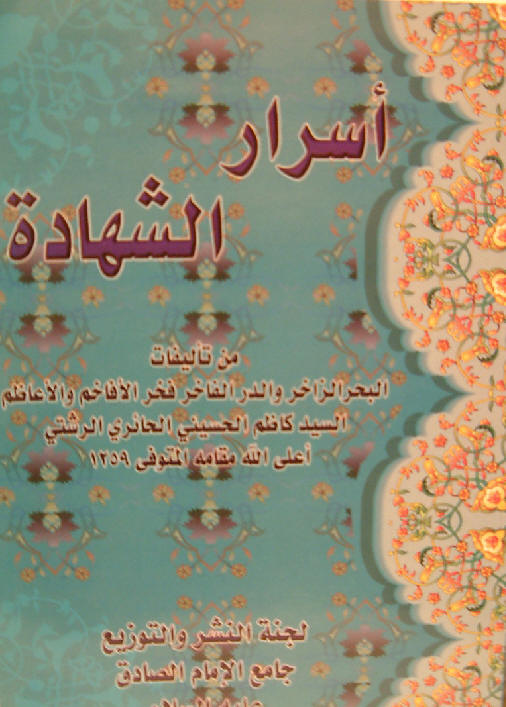
اسرارالشهادة سّرالحقيقة في وقعة الّطفوف
[No. 3 on cover]
Asrār al-shahāda sirr al-ḥaqīqat fī waq`at
al-ṭufūf
("The Mysteries of the Shahāda [Testimony of
Faith]; the secret of the reality regarding the incident of the ... ? ).
Sayyida Zaynab / Lajnat Iḥyā Turāth Madrassa al-Shaykh [al-Awḥad] al-Aḥsā'ī.
1st ed. 1421/ 2000. ADD DETAILS
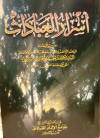
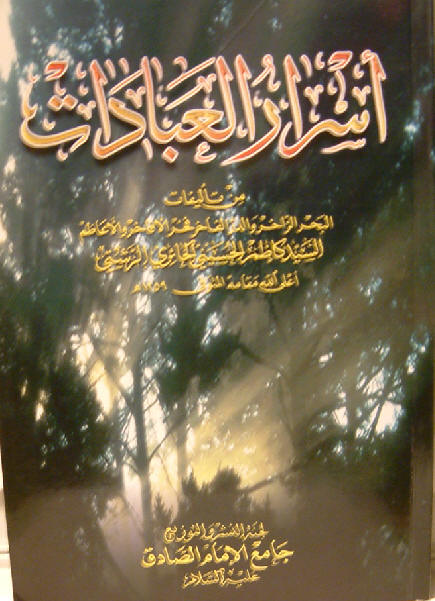
اسرارالعباداة
Asrār al-`ibādāt (The Mysteries of acts
of Servitude)
(1st printing) Kuwait: Jami` al-Imam al-Sadiq, 1422/1999.
268pp. Green Pbk. ADD DETAILS.
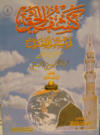
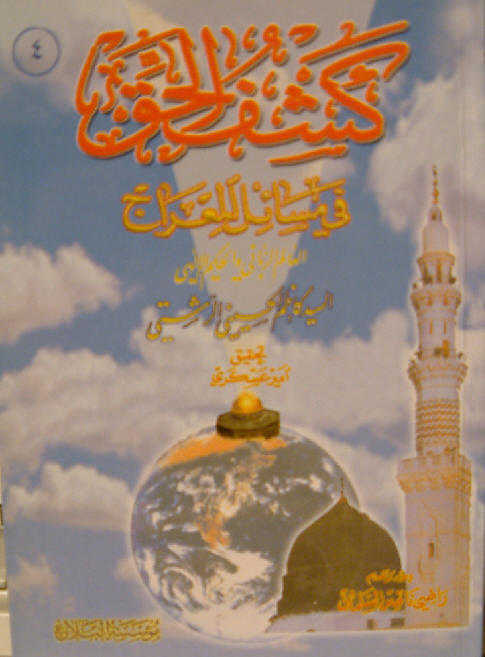
كشف
الّحق ّ في مسائل المعراج
[al-Risāla] Kashf al-ḥaqq fī masā'il al-mi`rāj
[4 on cover]
("The Unveiling of Reality
respecting issues surrounding the Mi`rāj
("Night Journey" of Muhammad])
A detailed and multi-faceted account of the
interpretation of the mi`rāj of Muhammad by Shaykh Aḥmad as defended and
further expounded by Sayyid Kazim Rashti. Edited and introduced by Ḥaj Amīr `Askarī and
Raḍī Nāṣir al-Salmān. Damascus, Syria: Lajnat Iḥyā Turāth
Madrassa al-Shaykh al-Awḥad [al-Aḥsā'ī]. Beirut: Mu'assat al-Balāgh.
1st ed. 15th Rabī` al-Awwal 1421/ 18th June 2000. pp.155 (= Introduction
by Raḍī Nāṣir al-Salmān pp. 7-17+ mss. repro. pp.19-20 +pp. 21-24 =
Preliminary Introductory Notes + pp. 25-155 = main text(s) of the Book +
pp.156-166 = Concluding Note, Sources cited and Index).
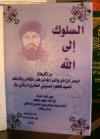
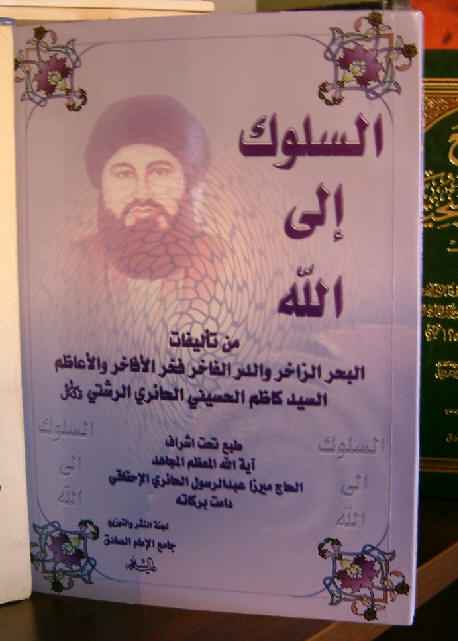
السير والسلوك الى الله
Rasā'il] al-Sayyir wa'l-sulūk ilā Allāh
["The Journeying and the Pathway unto God"]
...[by] Sayyid Kāẓim al-Ḥusaynī al-Ḥā'irī al-Rashtī,
Arabic text (ed.) Āyāt-Allāh al-Ḥajji Mīrzā `Abd al-Rasūl al-Ḥā`iri al-Iḥqāqī Reprinted from Majmū`a al-Rasā'il li-l-Sayyid Kāẓim. [Kuwait] : Jā`mi al-Imam al-Muhammadādiq, 1421/2000.
192pp. consisting of a brief introd. to the life of Sayyid Kazim (pp.3-11),
the al-Sayyir wa'l-sulūk ilā Allāh (pp.12-91). Its authorship and date of composition, the 10th
Muḥarram 1243 / 3rd August 1827 CHECK THIS p.175-185 (= the Khuṭba al-Bāligha of Sayyid Kāẓim) pp.187-192 (Index). ADD
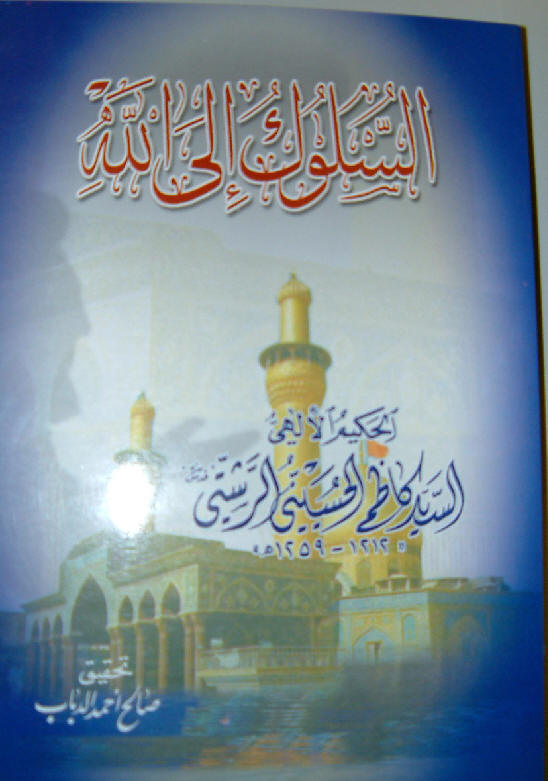
Another printing of Sayyid Kāẓim al-Ḥusaynī al-Rashtī's
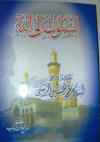
al-Sulūk ilā Allāh (see above) is
that edited by Muhammadāliḥ Aḥmad al-Dabbāb,
(1st printing)
Beirut [Damascus]: Mu`assat Fikr al-Awḥad
li'l-Taḥqiq wa'i-Ṭaba`at wa'l-Nashr, 1423/2002,
160pp (incl. index = pp.157-60). The text follows
some introductory, editorial notes including a chart of the abjad numerical
system (p. 12) and a two page reproduction of the opening and
ending of the autograph mss., (pp. 13-14) from p. 21ff. The text
printed here is apparently a reprint of the edition of Āyāt-Allāh Mīrzā `Abd al-Rasūl al-Ḥā`iri al-Iḥqāqī
(see above)
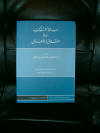
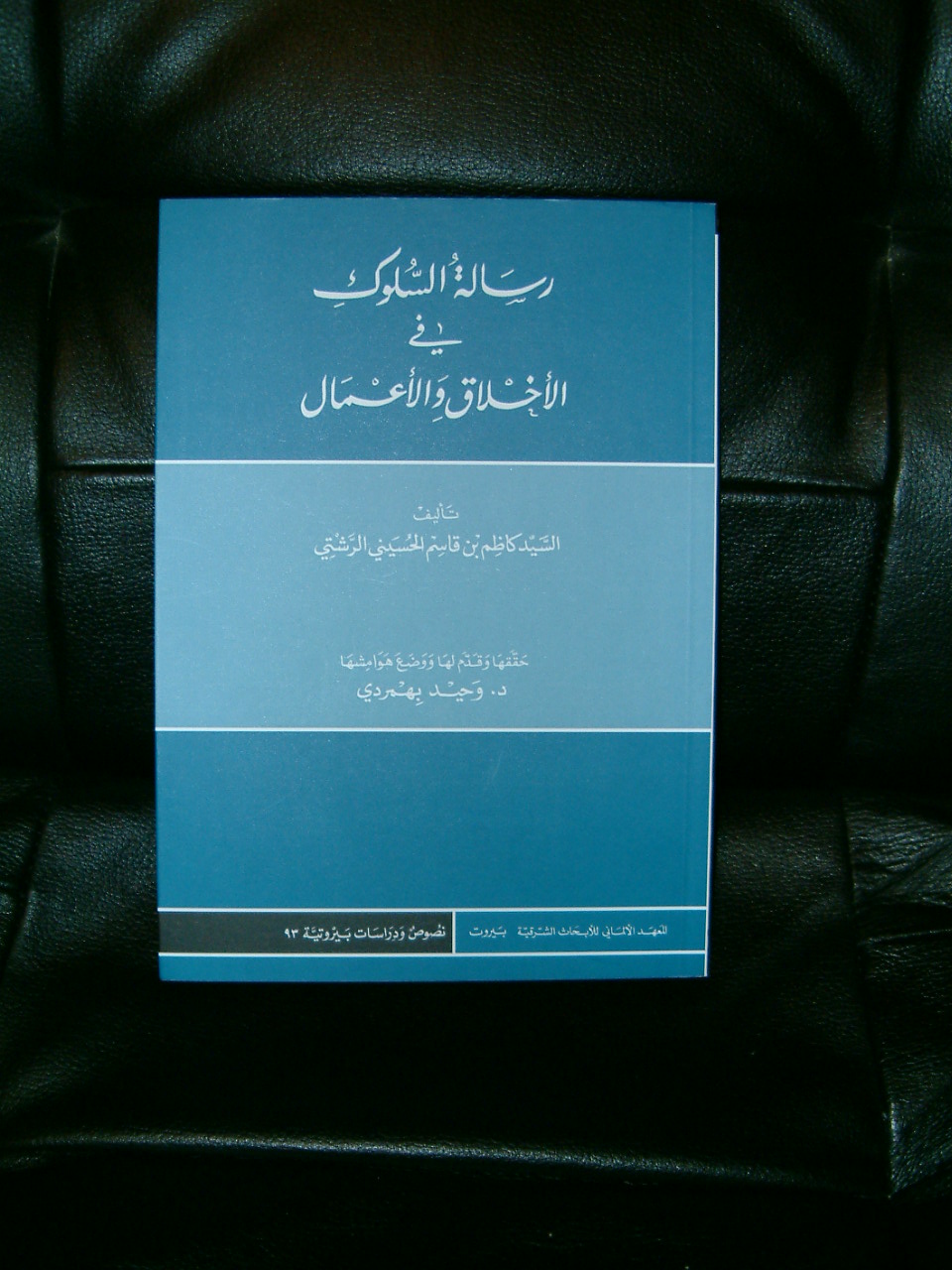
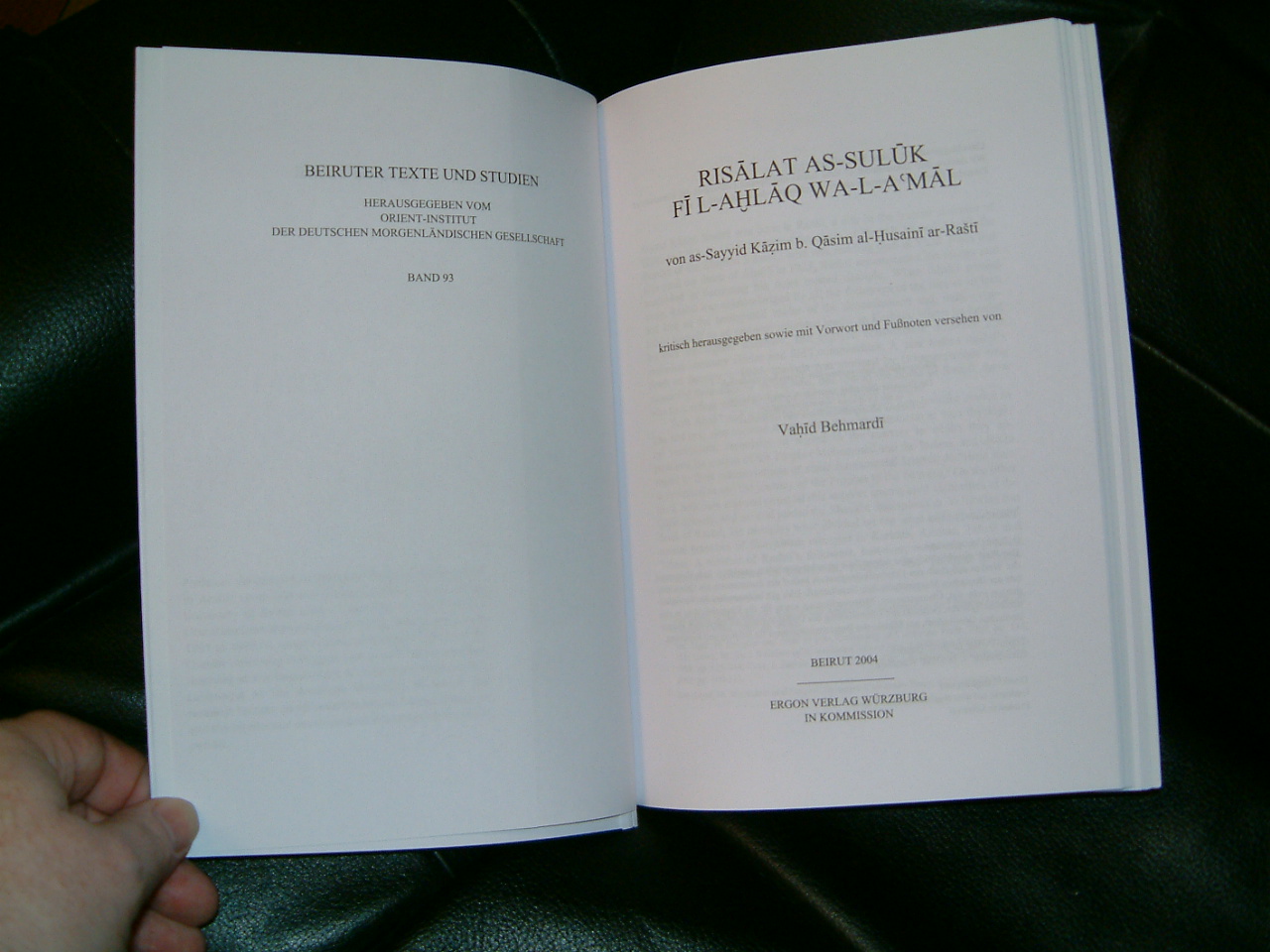
Behmardi, Vahid (ed.)
Sayyid Kāzim b. Qāsim al-Ḥusaynī al-Rashtī,
An accomplished Arabist with a doctorate from the Univ. of
Cambridge (UK), Proff. Behmardi teaches at the Dept. of Arabic and Near
Eastern Languages at the American University of Beirut and specializes in
Abbasid Literature, Islamic Mysticism and Intellectual developments in Iran
during the Qajar period.
-
The first 30 or so pages (pp.9-40) of this excellent new
critical edition consist of a detailed introduction by Behmardi to the
aforementioned (loosely) `Treatise on the Ethics and Good Deeds
accompanying the [Spiritual] Path'. It is based upon 3 mss., one
in Behmardi's personal library and two in Princeton Univ. Library (see pp.
36-40 and the clear reproductions of the 1st and last pages between [unpaginated]
pp. 41-49). The Behmardi edition is printed from page 50-94 and is followed
by detailed annotations (pp. 95-113) and a bibliography of
sources cited and consulted (pp.115-120).
-
Behmardi does not give any details of the relationship of
his new critical edition and the various other Middle Eastern (Beirut
+ Kuwait) printings of Sayyid Kāẓim Rashtī's (other?) Arabic
treatise(s) entitled al-Suluk ilā Allāh (or the
like). The above two non-Behmardi editions are based on further Arabic
mss. and/ or printings...... See further the Ibrahami Fihrist trans SL. +
further details..
TO BE COMPLETED
|