|
|
|
THE QAYYŪM AL-ASMĀ' OF THE BĀB.
Part III سورة الايمان Surat al- īmān
(The Surah of Security) or سورة المباهله
(The Surah of the
Mutual Execration)
on
Qur'ān 12:
Last Revised 19/05/09
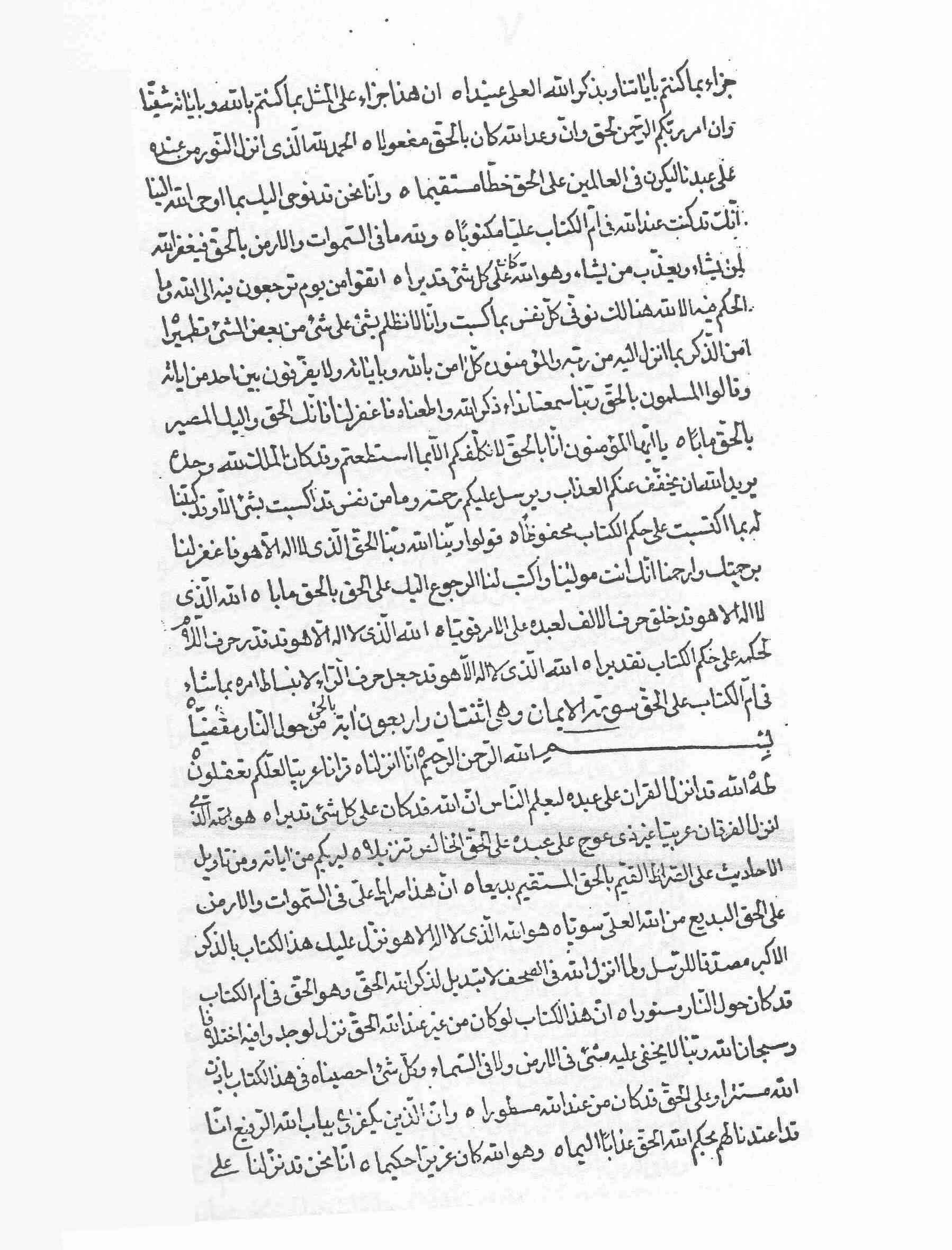
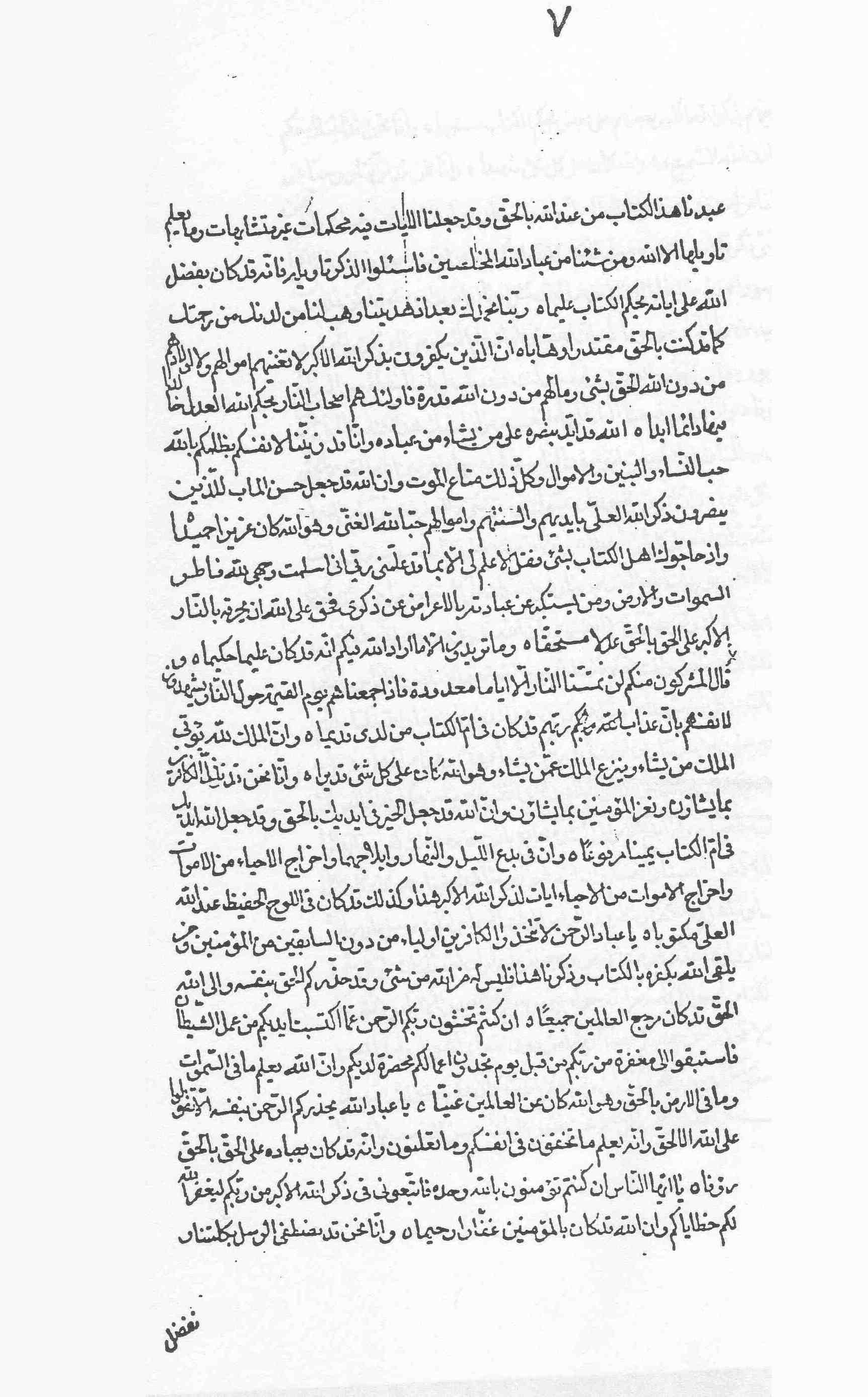
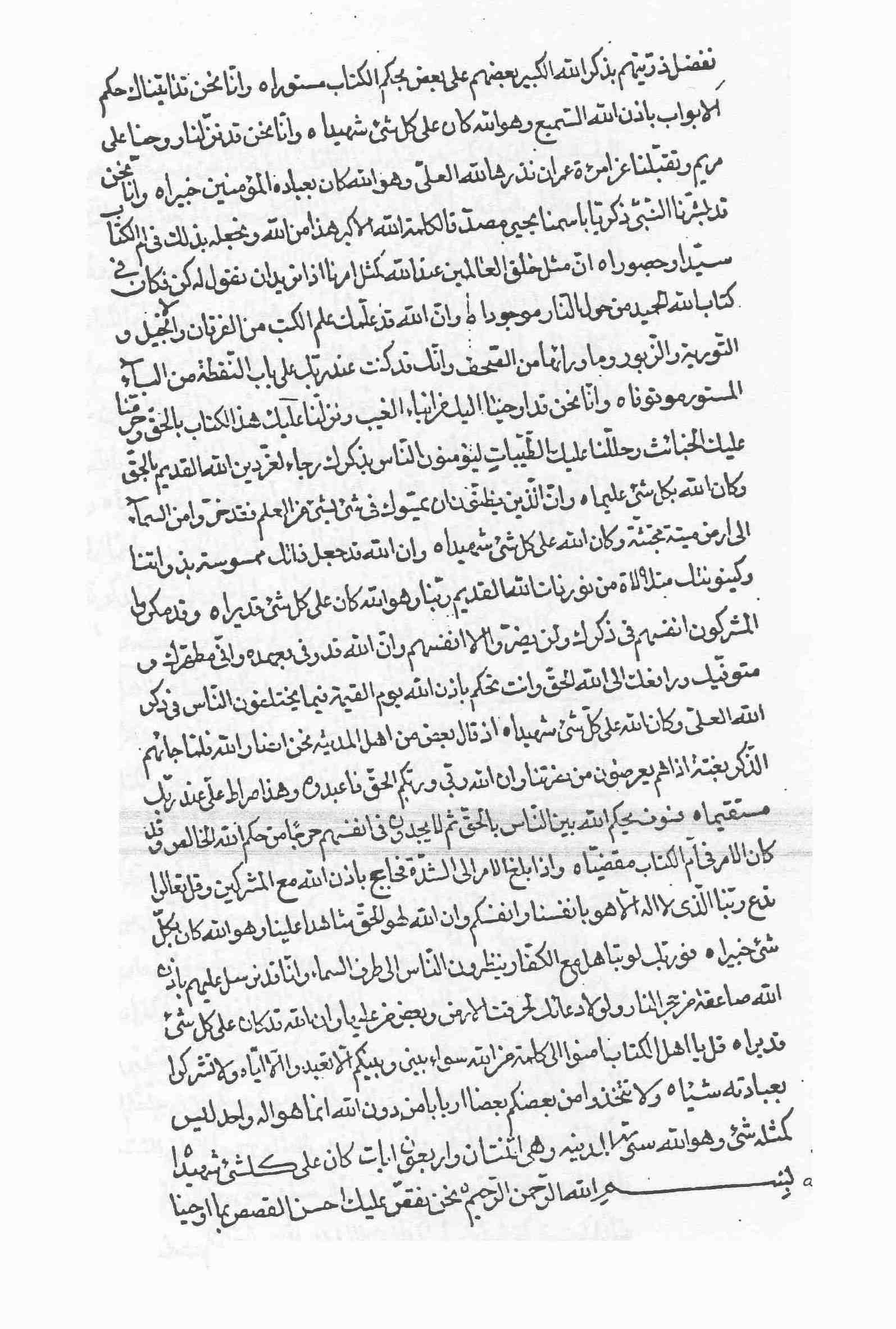
There follows the third part of my provisional translation of the Qayyūm al-asmā’ (= QA) of the Bāb (mid. 1844/1260) with selected notes. I began these translations in the early 1980s though I have not translated from a critical edition but consulted several good mss. scans of one of which are reproduced just before the translation. The versification of the surahs of the QA is often uncertain and I only tentatively count 42 verses in QA3 retaining versification for the sake of reference and commentary.
Though the versification of the surahs of the QA is sometimes uncertain the Bāb himself stated that there should be forty-two verses in each (of the 111) surahs as accords with the abjad numerical value of lī meaning "before me" in Q. 12:4b (Ar. لي = l + ī = 30+10= 40) and another two representative of "the sun and the moon" (40+2 = 42). This figure is explicitly confirmed in the Bāb's early Khuṭba al-dhikriyya ("The Sermon of the Remembrance") where it is stated in the context of an imamologically numbered categorization of the early works of the Bāb dating from between 1260-1262 (AH):
The same forty-two mode of surah versification of the QA., is evident in certain mss. of this work; most notably the early 1261 mss. of Muhammad Mahdī ibn Karbalā'ī where QA1 and 2 (and other surah headings) have following words after the surah title (e.g. Surat al-mulk) and in between the basmala, wa hiya ithnā'[tāni] wa arba`ūn "and it [the Surah] has forty two verses". In the following translations I retain this sometimes uncertain versification for the sake of reference and commentary.
Though the versification of the surahs of the QA is often uncertain, the
rhyming prose accusative endings are the primary indication. In QA 3 the
42 verses seem clear enough though such sometimes seems "symbolic" rather than a
clear setting down of 42 bayts (verses) of rhymed prose (saj`) -- although this seems to hold good for certain suras such as, for example, QA5. Elsewhere the "forty-two" configuration cannot easily be
set forth. It should also be noted that some verses of the QA are fairly short
while others extend for occasionally very long pericopae ("paragraphs") as is also the
case in the Qu'rān itself with which the QA has a great deal in common
especially respecting its form, style vocabulary and Arabic in rhyming prose
etc.
In neo-qur'ānic
fashion QA3 opens with the standard Islamic basmalah (= Bismillah
al-raḥman al-raḥim, "In the Name of God, the Merciful, the Compassionate").
Towards the end QA3 mubāhila terminology presupposing the victory of God/the Bāb/the Dhikr who are
privy to the divine secrets locked up in the Q., as contrasted with Islamic
forces of opposition to new dimensions of qur’anic exegesis and guidance from
God. The term mubāhala in the QA calls to mind episodes within
Islamic history, episodes of divine victory over human intransigence, folly and
opposition. The details surrounding Muhammad’s calling for mubāhala with
certain Christians of Najran as set down in Islamic sources, precipitated the
vindication of Islam and the realization of key Shī`ī perspectives as will be
outlined below.
The Arabic word
mubāhala derives from the triliteral
Arabic root B-H-L which has the basic sense of `to curse’ and which in forms V
and VI indicates `to curse one another’. The form mubāhala indicates two
parties in unresolved theological deadlock; thus being in a position of mutual
cursing or execration. A mubāhala involves two or more persons occupying
opposing viewpoints. At a solemn mubāhala meeting each party in their
respective ways calls upon God, invoking His curse upon their opponents as a
resolution of the matter under debate.. The godfearing and sincere have no fear
in this kind of mubāhala though persons uncertain might hesitate or
refuse to take part therein. Mubāhala presupposes that the Deity is
invoked and grave mutual cursing called upon proponents of error and
ungodliness. Mubāhala has its Islamic roots in various early episodes
of execration set in the context of theologically charged debate. Open
communication and dialogue in such circumstances has usually failed. One or
other party has backed out. To settle matters finally mubāhala has been
decided upon. Rooted in episodes of prophetological-Christological dispute the
best- known episode of the ‘ordeal’ of mubāhala took place in the early
Islamic era after the ninth year of the ḥijra (9 AH). Following the period of
Muhammad sending out a series of letters to rulers and notables summoning them
to accept Islam, certain leaders and inhabitants of the Christian town of of Najran (between Medina and the Yemen) came to be challenged with
mubāhala
by the Prophet Muhammad. The is reflected in certain verses in Q. Surah III, the
Surat al-`Imran (= Amram, esp. Q. 3:59ff). According to both Sunnī and Shī`ī
tradition it was in the 10th year of the ḥijra (632-3 CE) that this mubāhala
was proposed by the
Prophet Muhammad to a deputation headed by a Christian named Balharith b. Ka`b
of Najran. The mubalaha however, was postponed on the request of the
Christians who ultimately came to be accorded the protection of dhimmis,
protected non-Muslim inhabitants of the Islamic domain. In Shī`ī Islam the abovementioned
mubāhala is of great
moment. It has been commemorated and celebrated as a feast on the 21st of Dhu'l-ḥijja
(the lunar pilgrimage month [first two weeks]) and is closely linked with the
celebration of the yawn al-ghadir ("Day of the Pool [Marsh]"), for Shī`īs
the day of the appointment of `Alī as the wali (Successor) to the Prophet
which is celebrated a few days earlier on the 22nd (or 18th) day of this month
of Dhu’l-ḥijjah (Schumaker, EI2:276) .
The sixth Shī`īte Imam Ja`far al-Sadiq (d.c.148/765) is credited with a quite
lengthy Arabic prayer known as the Du`a yawm al-Mubāhala (Supplication
for the Day of the Mubāhala) the text of which is found in various Shī`ī sources
including the Mafatiḥ al-jinan of `Abbas al-Qummī. Therein the Du`a'
yawm al-Mubāhala is said to be part of the commemoration held on the 24th
Day of Dhu'l-ḥijja and closely linked with the aformementioned yawn al-ghadr ("Day of the Pool/Marsh"). For the Shi`a the yawm al-mubāhila is
celebrated as a noble day. Important devotional acts are carriedout thereon
including the performance of an obligatory prayer of two rak`ats
(prostrations) comparable to the Ṣalat of the Feast of Ghadir but with
an additional recitation of the ayat al-kursī ("Throne verse" = Q.2:255).
On it the Du`a' yawm al-mubāhala should also be recited twice; the second
recitation coming after the obligatory prayer of two rak`ats
(prostrations) and seventy pleas for Divine forgiveness being introduced with
the phrase "Praise be to God, the Lord of all the worlds" (Qummī, Mafatiḥ, 351,
354). Charitable acts should also be undertaken after the example of Imam `Alī.
The recitation by
the Shī`ī faithful of the Du`a' yawm al-mubahila (on the 24th of most
sacred month of Dhu'l-ḥijjah) is their highly potent means of commemorating the
`Day of Mutual Execration' . Traditionally it is
reckoned that on this Day that the Prophet gathered the (subsequently named)
"people of the cloak" (ahl al-kisa' , Q. 33:32 ) who, apart from [1]
Muhammad himself, are [2] `Alī, [3] Faṭima, [4] ḥasan and [5] ḥusayn). They
were gathered by Muhammad beneath his garment (`aba') or under his cloak (al-kisa') are referred to as the "people of my house"
(ahl bayti).
Towards the end of QA3 the Bāb uses a verbal form indicative of mubāhala
(`mutual execration’), tabāhila relative to his Islamic opponents. He
rewrites Q. 3:61b = thumma nabtahil fa-naj`al` la`nata Allah `ala al-kadhibin (
"then let us engage in mutual execration, mubāhala;’ So shall we
invoke the curse of God upon the liars". Drawing upon Q. 3:61 the
Bāb promises his opponents that should this proposed event take place, that
acting on behalf of God, he would cause a destructive thunderbolt of the stone
of hell-fire (ṣa`iqat min hajr al-nār) to rain upon the earth. In this
way the Bāb commands terrible power if forced to engage in a mubāhala
confrontation and resolition.
For Baha’is it is particularly interesting to note that the Du`a yawm al-mubāhala
(Supplication for the Day of the Mubāhala) ascribed to the sixth Imam,
commences, like the Ramaḍan fasting prayer, the Du`a yawn al-sabaḥ
(Supplication for the Dawn time) ascribed to the fifth Imam Muhammad al-Baqir (d.c..126/743)
with several occurrences of the most powerful "Greatest Name" of God, the word Baha’ (lit. = "glory", "splendour", "beauty" etc):
O my God! I beseech Thee by Thy Bahā' ("Splendour") at its most Splendid (abha) for all Thy
Splendor (bahā') is truly Resplendent (bahiyy). I, verily, O my
God! beseech Thee by the fullness of Thy Splendour (bahā').
It should also be
noted that Baha’i historical sources include episodes of mubāhala. At the
time, for example, of the proposed confrontation between Mīrzā Yaḥya
and Baha’-Allāh at the Sultān Selim mosque in Edirne [Adrianople] around mid.
1866. Yaḥya failed to turn up for a mubāhala confrontation with Baha’-Allāh. Several alwaḥ
were written by Baha’-Allāh commenting upon this unrealized confrontation
detailing his theological victory over his half-brother, Mīrzā Yaḥya,
subsequently the focal centre of opposition as the fountainhead of Azalī Bābīsm. Such Tablets are named Lawḥ-i mubāhila. A number of them have been
printed though none fully translated into European languages. Among the many
other points of interest in QA3 are its creative, midrashic type rewritings of
some key verses and pericopes of the Qur’an (= Q). QA3 draws especially on Q.3.
The QA in large measure consists of exegetical rewritings of the Q. The
tafsir element in most surahs of the QA is for the most part, found in its
last paragraph. Much of the other paragraphs rewrite diverse verses and
paragraphs sometimes interweaving elementa of distinctly Bābī terminology in
ways that suggest aspects of eschatological realization and imminent parousia.
Examples, includes
the Bāb’s exegetical rewrite of Q. 3:3-7 making it clear that the
QA, like the Q. has a literal aspect and inner or allegorical senses. According
to QA3:10-12 the QA has a muḥkamat, perspicuous, clear aspect, without
ambiguity as well as a ta`wil or allegorical dimension, verse or aspects
mutashābihāt. (in need of clarification). Echoing and interpreting the Q.
the Bāb states that "none knows its hidden senses (ta'wīl) except God"
and "such as We will [to know them] among the sincere servants of God" (Q.3:
3-7). While for the Shī`ī Muslims it is God and the Imams who are aware of the
inner dimensions of the Q., the Bāb identifies "the Remembrance (al-dhikr)" as the one aware of the "hidden senses" (ta'wil)" of the QA., the new Bābī Qur’an. It is the quasi-messianic Dhikr (Remembrance), the occulted twelfth
Imam or the reality of the Bāb -- and for Baha’is also Baha’u’llah -- who "is
invested with the knowledge of its verses". Baha’is in accordance with various alwaḥ of Baha’u’llah also understand this master of the ta’wil
hermeneutic as Baha’u’llah. He is identified as the Dhikr or Dhikr
Allah al-abkar [al-a`ẓam] in Baha’i scripture. SCANS OF THE 1261 Mss. OF QA 3.
QA-003-P6 QA-003-P7 QA-003-P8
QAYYŪM AL-ASMĀ'
Part III
سورة
الايمان
(The Surah of
Security)
on
Qur'ān 12:2
Prov. trans. Stephen N. Lambden
بسم اللّه الرّحمن الرّحيم
[2]
إِنَّا أَنزَلْنَاهُ قُرْآنًا عَرَبِيًّا
لَعَلَّكُمْ تَعْقِلُونَ
[4]
اللّه قد انزل القرآن علی عبده ليعلم النّاس انّ اللّه قد كان علی كلّ شیء قديراً [5] هو اللّه الّذی انزل الفرقان عربيّا غير ذی عوج علی عبده علی الحقّ الخالص تنزيلاً [6] ليريكم من آياته و من تأويل الاحاديث علی الصّراط القيّم بالحقّ المستقيم بديعاً [7] انّ هذا صراط علیّ فی السّموات و الارض علی الحقّ البديع من اللّه سويّاً [8] هو اللّه الّذی لا اله اّلا هو نزّل عليك هذا الكتاب بالذّكر الاكبر مصدّقا للرّسل و لما انزل اللّه فی الصّحف لاتبديل لذكر اللّه الحقّ و هو الحقّ فی امّ الكتاب قد كان حول النّار مستورا [9] انّ هذا الكتاب لو كان من غير عند اللّه الحقّ نزل لوجدوا فيه اختلافا كثيراً
[10] و سبحان اللّه ربّنا لا يخفی عليه شیء فی الارض و لا فی السّما ء
و كلّ شیء احصيناه فی هذا الكتاب باذن اللّه مستتراً و علی الحقّ قد كان من عند اللّه مسطوراً [11] و انّ الّذين يكفرون بباب اللّه الرّفيع انّا قد اعتدنا لهم بحكم اللّه الحقّ عذاباً اليماً [12] و هو اللّه كان عزيزاً حكيماً [13] انّا نحن نزّلنا علی عبدنا هذا الكتاب من عند اللّه بالحقّ و قد* جعلنا الايات فيه محكمات غير متشابهات و ما يعلم تأويلها الّا اللّه و من شئنا من عباد اللّه المخلصين فاسئلوا الذّكر تأويله فانّه قد كان بفضل اللّه علی آياته بحكم الكتاب عليماً
[14] ربّنا نحمدك بعد اذ هديتنا و هب لنا من لدنك من رحمتك كما قد كنت بالحقّ مقتدراً وهّاباً
[15] انّ الّذين يكفرون بذكر اللّه الاكبر لاتغنيهم اموالهم و لا اولادهم من دون اللّه الحقّ بشی ء
و ما لهم من دون اللّه قدرة فاولئك هم اصحاب النّار بحكم اللّه العدل خالداً فيها دائماً ابداً
[16] اللّه قد ايّد بنصره علی من يشإ من عباده و انّا قد زينّنا لانفسكم بظلمكم باللّه حبّ النّسإ و البنين و الاموال و كلّ ذلك متاع الموت و ان اللّه قد جعل حسن الماب للّذين ينصرون ذكر اللّه العلیّ بايديهم و السنتهم و اموالهم حبّا للّه الغنیّ و هو اللّه كان عزيزاً حميدا
But God doth support with his
aid whomsoever He willeth from among His servants ( Q. 3:13b). We, verily, on
account of your tyranny against God, have made the love of women and sons (ḥubb
al-nisa’ wa’l-banīn) and possessions appear particularly fair unto
yourselves though such are the merchandise of death (maṭā` al-mawt; cf.
Q. 3:14a). God hath made the best place of return (ḥusn al-ma'ab;
Q.13:14b) for those who assist the Exalted Remembrance of God (dhikr -Allāh) with their hands, through their speech and by means of their possessions out of
love for God, the Self- Sufficient. And He, God, is One Mighty, worthy of
praise. [17]
و اذ حاجّوك اهل الكتاب بشیء فقل لا علم لی الّا بما علّمنی ربّی
انّی اسلمت وجهی اللّه فاطر السّموات و الارض
و
من يستكبر عن عبادته بالاعراض عن ذكری فحقّ علی اللّه ان يحرقه بالنّار الاكبر علی
الحقّ بالحقّ عدلاً مستحقّاً
And when the
people of the Book (ahl al-kitāb) dispute with thee [the Bāb] over
anything then say: `I have no knowledge save that which my Lord hath taught me.
I, verily, have submitted my whole self unto God, the Cleaver of the heavens and
of the earth' (Q.3:20). And such as disdain to do Him worship through turning
aside from My Remembrance (dhikrī) do justly, in very truth, deserve
that God burn him in the most great fire (of hell; al-nar al-akbar). [18]
و ما تريدون ا لا ما اراد اللّه فيكم انّه قد كان عليماً حكيماً So desire ye not other than that which God hath desired for you. He, verily, is
One All-Knowing, All-Wise. [19]
و قال المشركون منكم
لن
تمسّنا النّار الّا ايّاما معدودة فاذا جمعناهم يوم القيمة حول النّار يشهدون
لانفسهم
بانّ
عذاب ربّهم قد كان فی امّ الكتاب من لدی الباب قديماً The
polytheists among you say, `The fire [of hell] shall not touch us except for a
few numbered days'. But when We gather them together about the fire [of hell] on
the Day of Resurrection they shall testify against their own selves for the
torment of their Lord was foreordained in the [Archetypal] Mother Book on the
part of the Gate (al-bāb; cf. Q.3:24-25). [20]
و انّ الملك للّه يؤتی الملك من يشإ و ينزع الملك عمّن يشإ و هو اللّه كان علی كلّ
شیء قديراً Dominion belongs unto
God. He gives dominion unto whomsoever He wills and He divests dominion
from whomsoever He wills. And He, God, is powerful over all things (cf. Q.
3:26a). [21] و انّا نحن قد نذلّ الكافرين بما يشاؤن * و نعزّ المؤمنين بما يشاؤن *و انّ اللّه قد جعل الخير فی ايديك بالحقّ و قد جعل اللّه ايديك فی امّ الكتاب يميناً مرفوعاً
[22+]
[23] يا عباد الرّحمن لاتتّخذوا الكافرين اوليإ من دون السّابقين من المؤمنين و من يلقی اللّه بكفره بالكتاب و ذكرنا هذا فليس له من اللّه من شیء و قد حذّركم الحقّ بنفسه و الی اللّه الحقّ قد كان مرجع العالمين جميعاً
[24] ان كنتم تخشون ربّكم الرّحمن عمّا اكتسبت ايديكم من عمل الشّيطان فاستقبوا الی مغفرة من ربّكم من قبل يوم تجدون اعمالكم محضرة لديكم و انّ اللّه يعلم ما فی السّموات و ما فی الارض بالحقّ و هو اللّه كان عن العالمين غنيّاً
[25] يا عباد اللّه يحذّركم الرّحمن بنفسه الّا تقولوا علی اللّه الالحقّ * و انّه يعلم ما تخفون فی انفسكم و ما تعلنون
و انّه قد كان بعباده علی الحقّ بالحقّ رؤفاً
[26] يا ايّها النّاس
O ye people!
[27] و انّا نحن قد نصطفی الرّسل بكلمتنا و نفضل ذريّتهم بذكر اللّه الكبير بعضهم علی بعض بحكم الكتاب مستوراً
[28] و انّا نحن قد اتيناك حكم الابواب باذن اللّه السّميع و هو اللّه كان علی كلّ شیء شهيداً
[29] و انّا نحن قد نزّلنا روحنا علی مريم و تقبّلنا عن امرءة عمران نذر ها للّه * العلیّو هو اللّه كان بعباده المؤمنين خبيراً
[30] و انّا نحن قد بشّرنا النّبیّ زكريّا باسمنا يحيی مصدّقا لكلمة اللّه الاكبر هذا من اللّه و نجعله بذلك فی امّ الكتاب سيّداً و حصوراً
[31] انّ مثل خلق العالمين عند اللّه * كمثل امرنا
اذا نريد ان نقول له كن فكان فی كتاب اللّه الحميد *[الحیّ] من حول النّار موجودا
To God the likeness of the creation of the worlds is as the
likeness of [the creative potency of] Our Logos-Command for when We desire [something] We need only say to it
`Be!', then, such is found to exist in the Book of God, the One worthy of
Praise, in the vicinity of the [Sinaitic] Fire (al-nār; cf. Q. 3:47). [32]
و انّ اللّه قد علّمك علم الكتب من الفرقان و الانجيل و التّورية و الزّبور و ماورائها من الصّحف و انّك قد كنت عند ربّك علی باب النّقطة من البإ المستور موقوفاً
[33] و انّا نحن قد اوحينا اليك من انبإ الغيب و نزّلنا عليك هذا الكتاب بالحقّ و حرّمنا عليك الخبائث و حلّلنا عليك الطّيّبات ليؤمنون النّاس بذكرك رجإ لعزّ دين اللّه القديم بالحقّ و كان اللّه بكل شیء عليماً
[34] و انّ الّذين يظنّنون ان يمسّوك فی شیء بشیء من العلم فقد خرّوا من السّمإ الی ارض ميّتة مجتثّة و كان اللّه علی كلّ شیء شهيداً
[35]
[36] و قد مكروا المشركون انفسهم فی ذكرك و لن يضرّوا الّا انفسهم و انّ اللّه قد وفی بعهده و انّی مطهرّك و متوفّيك و رافعك الی اللّه الحقّ و انت تحكم باذن اللّه يوم القيمة فيما يختلفون النّاس فی ذكر اللّه العلیّ و كان اللّه علی كلّ شیء شهيداً
[37] ا ذ قال * بعض من اهل المدينة نحن انصار اللّهفلمّا جائهم الذّكر بغتةً اذا هم يعرضون عن نصرتنا ان اللّه ربّی و ربّكم الحقّ
فاعبدوه و هذا صراط علیّ عند ربّك مستقيماً
"Some of the
people of the City [Medina = Shiraz?] have declared, `We are the helpers of God',
but when the [this] Remembrance (al-dhikr) came suddenly [upon them], they
turned aside from helping Us (Q. 3:52). God, verily, is my Lord and your Lord,
the True One. So serve ye Him and this the [Elevated] Path of `Alī
[the Bāb? ; ṣiraṭ `Alī [`Alīyy]) which is straight in the estimation of thy [sing.]
Lord (rabb; .cf. Q. 3:51)." ( see SWB: XX =adapted) [38] فسوف يحكم اللّه بين النّاس بالحقّ ثمّ لايجدون فی انفسهم حرجاً من حكم اللّه الخالص و قد كان
الامر فی امّ الكتاب مقضيّاً God will, in truth judge between the
people; then they shall find themselves unable to resist the judgment of God,
the Pure One (Q.4:65b). Verily, the matter (or Logos-Command = al-amr) is
stipulated in the Mother [Archetypal] Book (ibid.). [39] و اذا بلغ الامر الی الشّدة فحاجج باذن اللّه مع المشركين و قل تعالوا ندع ربّنا الّذی لا اله الّا هو بانفسنا و
انفسكم و ان اللّه لهو الحقّ شاهدا علينا
[40] فو ربّك لو تباهل مع الكفّار ينظرون النّاس الی طرف * [طرق] السّمإ
و انّا قد نرسل عليهم باذن اللّه صاعقة من حجر النّار و لو لا دعائك لحرقت الارض و بعض من عليها انّ اللّه قد* كان علی كلّ شیء قديراً
By thy Lord!
[41] قل يا اهل الكتاب آمنوا الی كلمة من اللّه سوإ بينی و بينكم الّا تعبدوا الا ايّاه و لاتشركوا بعبادته شيئاً
Say: O people of the Book!
[42]
و لا تتّخذوا من بعضكم بعضاً ارباباً من دون اللّه انّما هو اله واحد ليس كمثله شیء و هو اللّه كان علی كلّشیء شهيدا
_____________________________________
ALTERNATIVE TEXTUAL READINGS FROM SELECT MSS.
ADD
|